Buying a new toilet looks simple until you stand in a showroom and realize that toilets come in different rough-in sizes, bowl shapes, heights, flushing systems, water-use ratings, and installation configurations.
The biggest mistake I see homeowners make is choosing a toilet because it looks good or because the price seems attractive. Then they get home and discover that the rough-in does not match, the bowl sticks too far into the bathroom, the seat is not included, or the toilet does not flush the way they expected.
If you are replacing an old toilet in 2026, the better approach is to treat the purchase like a small plumbing project. Measure the bathroom first, identify the existing toilet setup, decide how you actually use the toilet, and only then compare models.
This guide walks through the checks I would make before buying a new toilet, from rough-in measurements and bowl shape to flush performance, water efficiency, comfort, maintenance, installation cost, and long-term value.
Quick answer: The best toilet is not necessarily the most expensive one. For most homeowners, a good choice is a properly sized toilet with a compatible rough-in, comfortable bowl height, reliable flushing performance, reasonable water consumption, readily available replacement parts, and a design that fits the bathroom.
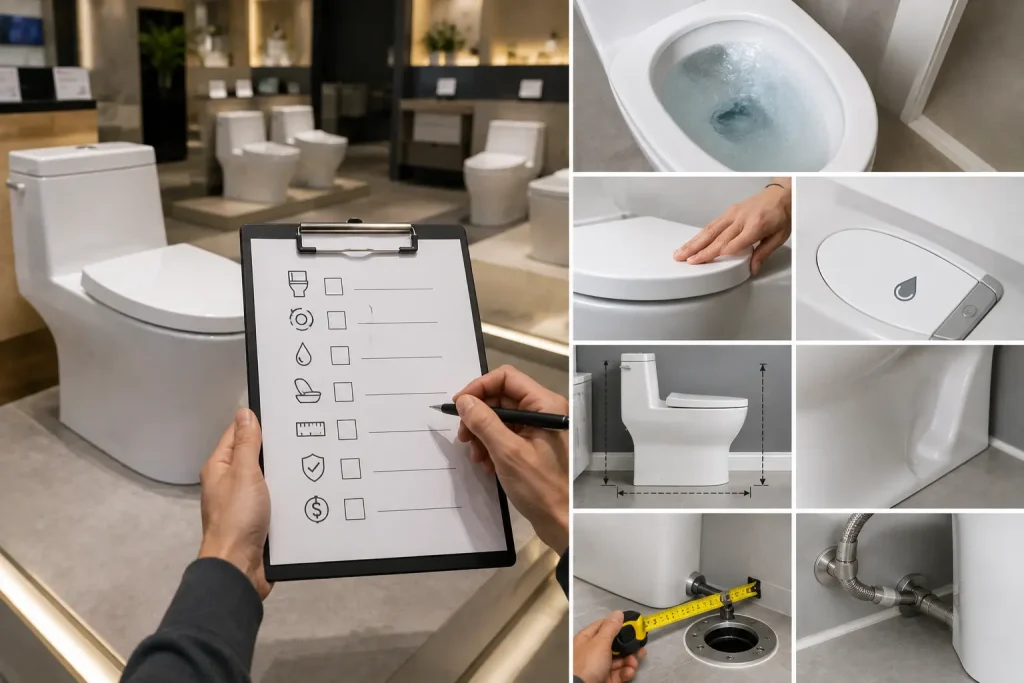
Quick Checklist: What Should You Check Before Buying a Toilet?
- Rough-in measurement: Make sure the new toilet matches the existing drain location.
- Bathroom clearance: Check the distance from the toilet to the wall, vanity, shower, and door.
- Bowl shape: Choose round-front or elongated based on available space and comfort.
- Seat height: Standard, comfort, and taller models feel very different in daily use.
- Flush system: Compare gravity, pressure-assisted, dual-flush, and other configurations.
- Water use: Look for the WaterSense label when water efficiency is important.
- Flush performance: Do not judge performance from water use alone.
- Cleaning: Consider rim design, trapway design, and how easily you can reach the surfaces.
- Maintenance: Check whether replacement flappers, fill valves, cartridges, and other parts are easy to find.
- Installation: Confirm whether the toilet includes the seat, wax ring or seal, bolts, and other required components.
1. Start With the Rough-In Measurement
If there is one measurement I would never skip, it is the toilet rough-in.
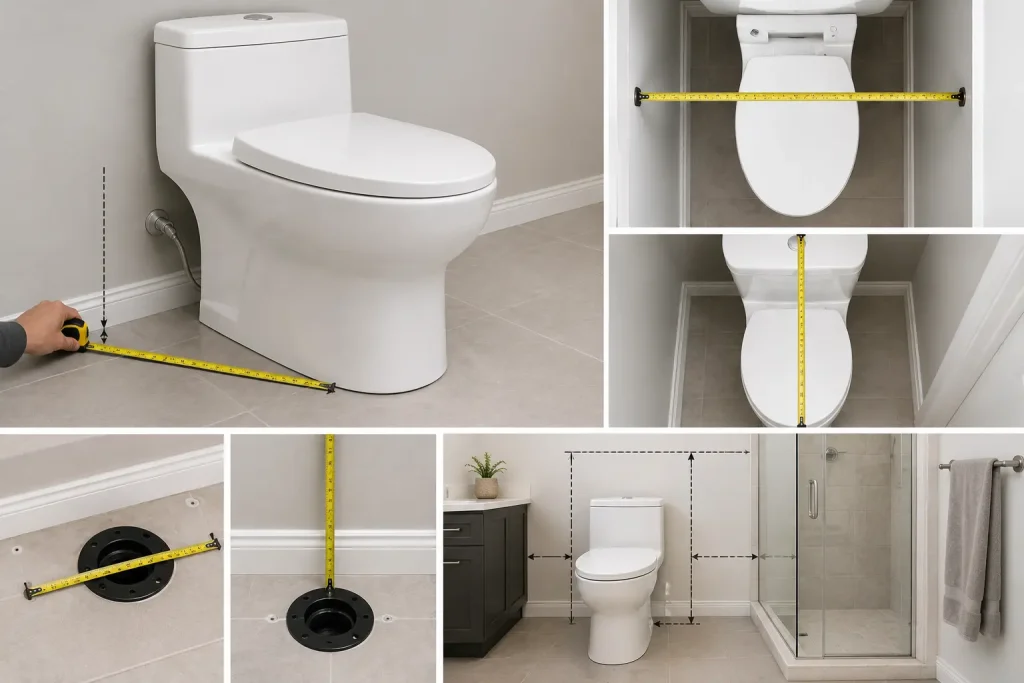
The rough-in is the distance from the finished wall behind the toilet to the centerline of the toilet’s floor drain or mounting bolts, depending on how the measurement is taken. In a typical replacement project, you need to identify the existing configuration before ordering a new toilet.
A common mistake is measuring from the baseboard or an unfinished wall instead of the finished wall surface. That small difference can cause installation problems.
My practical advice: Measure from the finished wall to the center of the closet bolts, and check the manufacturer’s rough-in requirements before purchasing.
If the existing toilet is already installed, take the measurement before removing it. It is much easier to confirm the old setup while everything is still visible.
2. Check the Available Bathroom Space
A toilet can fit the drain connection and still be wrong for the bathroom.
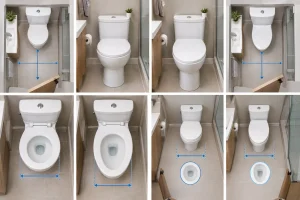
Before buying, check the distance from the front of the toilet to the opposite wall, vanity, shower enclosure, or bathroom door. Also consider the width available around the bowl.
This matters especially in small bathrooms. An elongated toilet can provide more seating comfort, but its longer bowl may extend farther into the room than a round-front model.
For a small bathroom: prioritize projection from the wall and door clearance.
For a larger primary bathroom: comfort and visual proportions can take priority over saving a few inches.
3. Round vs. Elongated Toilet Bowls
The bowl shape is not just a style decision. It changes comfort, floor-space requirements, and how the toilet feels in a small bathroom.
| Feature | Round-Front Toilet | Elongated Toilet |
|---|---|---|
| Space requirement | Usually more compact | Usually projects farther forward |
| Comfort | Good for many users | Often preferred for adult comfort |
| Small bathroom | Very practical | Can feel bulky in tight layouts |
| Appearance | Traditional | More contemporary |
| Best use | Powder rooms and compact bathrooms | Primary bathrooms and larger spaces |
For a small guest bathroom, I would normally consider a round-front toilet first. For a larger family bathroom, an elongated bowl is often worth considering because of the additional seating area.
4. Pay Attention to Toilet Height
Toilet height is one of those details that becomes obvious only after you have used the toilet every day for a few months.
Standard-height toilets are relatively low. Comfort-height and other taller configurations can make sitting down and standing up easier for many adults.
However, taller is not automatically better for everyone.
- Shorter users: A very tall toilet may feel less comfortable.
- Taller adults: A higher seat can reduce the amount of bending required.
- Older homeowners: A taller configuration may make sitting and standing easier.
- Children: A standard-height toilet can sometimes be easier to use independently.
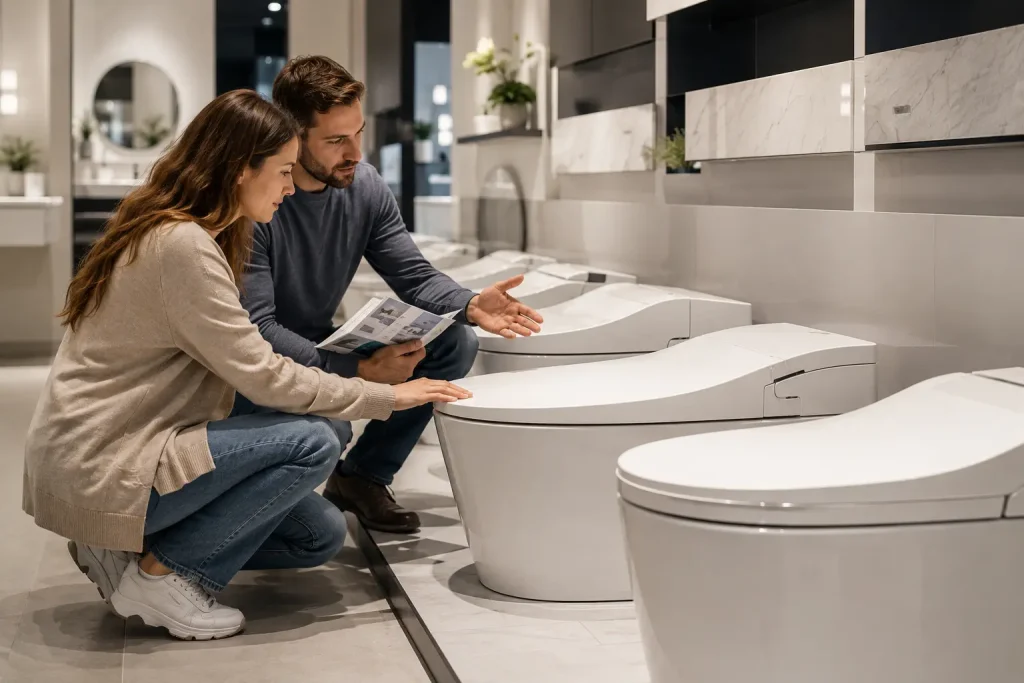
If possible, sit on a similar-height toilet before buying. Toilet height is difficult to judge accurately from product photographs.
5. Compare the Flushing System
The flushing system is where toilet specifications become more technical.
Most residential toilets use a gravity-based system, while some models use pressure-assisted technology or other engineered flushing mechanisms. Dual-flush toilets provide separate flushing options, although their controls and operating feel vary between models.
| Flush Type | Typical Advantage | Possible Drawback | Best For |
|---|---|---|---|
| Gravity flush | Simple and familiar | Performance varies by design | Most residential bathrooms |
| Pressure-assisted | Strong, forceful flush | Can be noisier and more complex | Heavy-use bathrooms |
| Dual-flush | Choice of reduced or full flush | More user controls and components | Homes focused on water efficiency |
| Smart/electronic flush | Convenience and automation | More electronics to maintain | Modern or luxury bathrooms |
Do not choose a toilet simply because its flushing system sounds powerful. Look for evidence that the complete toilet has been independently tested for flushing performance.
6. Check the Water Efficiency Rating
Water use matters because toilets are one of the largest sources of indoor residential water consumption. The EPA says toilets account for nearly 30 percent of an average home’s indoor water use. WaterSense-labeled residential toilets use no more than 1.28 gallons per flush and are independently certified for both efficiency and performance.
For comparison, EPA’s current information identifies 1.6 gallons per flush as the U.S. federal standard, making a 1.28 GPF WaterSense toilet approximately 20 percent lower in water use than that standard.
This is one reason I generally recommend looking for the WaterSense label when buying a new toilet in the United States.
One important 2026 detail: EPA’s current residential toilet page says WaterSense Specification Version 1.2 remains in effect while the effective date of Version 2.0 is paused. So do not assume every discussion online about the newer specification represents the currently effective program requirements.
7. Do Not Confuse Low Water Use With Weak Flushing
This is an old misconception that still causes homeowners to hesitate over high-efficiency toilets.
A modern low-flow toilet is not simply an older toilet with less water poured into the tank. The bowl geometry, trapway, jet configuration, and flushing mechanism are designed as a system.
EPA WaterSense requires independently certified performance as well as water efficiency. That means the label is more useful than simply choosing the model with the lowest advertised GPF number.
For a family bathroom that sees frequent daily use, I would prioritize verified flushing performance plus reasonable water efficiency rather than chasing the lowest possible water-use number.
8. Look at Cleaning and Maintenance Before Buying
A toilet that looks beautiful on the showroom floor can become annoying if it is difficult to clean.
Pay attention to:
- The shape and accessibility of the bowl.
- The area around the base.
- The design of the trapway.
- Whether the seat can be removed easily.
- Whether replacement parts are commonly available.
Skirted toilets can make the outside of the toilet easier to wipe because the trapway is concealed. However, the installation and servicing approach can differ from a traditional exposed-trapway toilet.
For a busy family bathroom, I would rather choose a toilet with straightforward maintenance and readily available parts than select a complicated design solely because it looks more luxurious.
9. Check What Is Actually Included in the Box
Do not assume every toilet package contains everything you need for installation.
Before ordering, check whether the package includes:
- Toilet seat
- Mounting bolts
- Wax ring or alternative sealing component
- Supply connection
- Tank hardware
- Flush handle or flush control
Some products include the seat, while others sell it separately. That can make a seemingly inexpensive toilet more expensive once all required accessories are added.
10. Compare the Total Installation Cost
| Purchase Situation | Toilet Cost | Installation | Maintenance | Advantages | Disadvantages |
|---|---|---|---|---|---|
| Basic gravity toilet | Low to moderate | Usually straightforward | Low | Simple, familiar parts | Fewer premium features |
| Comfort-height toilet | Moderate | Similar to standard installation | Low | Better accessibility for many adults | May feel too tall for some users |
| Pressure-assisted toilet | Moderate to high | Moderate | Moderate | Strong flushing action | Can be noisier |
| Skirted toilet | Moderate to high | Can be more involved | Low to moderate | Clean exterior appearance | Some repairs can be less convenient |
| Smart toilet | High | Higher | Higher | Automation and added functions | More electronics and higher replacement cost |
Installation pricing varies substantially by location and by the condition of the existing plumbing. If the flange, shut-off valve, floor, or drain connection needs repair, the installation can become much more expensive than simply swapping one toilet for another.
11. Check the Toilet Flange Before Ordering
If you are replacing an existing toilet, inspect the condition of the toilet flange if possible.
A damaged, loose, or incorrectly positioned flange can cause leaks or make the new toilet difficult to install correctly.
This is especially important in older homes. A new toilet cannot compensate for a damaged connection underneath it.
If the existing toilet already rocks, leaks around the base, or has been repaired several times, investigate the floor and flange condition before assuming the toilet itself is the only problem.
12. Think About Your Actual Household Use
Best Choice for a Small Bathroom
Choose a compact toilet with a suitable rough-in and a bowl shape that leaves enough clearance for the door and nearby fixtures. Avoid choosing an elongated model simply because it looks more modern if the bathroom is already cramped.
Best Choice for a Family Bathroom
Prioritize reliable flushing, comfortable height, easy cleaning, and readily available replacement parts. A straightforward, well-supported toilet can be a better long-term choice than an expensive model with features nobody uses.
Best Choice for an Older Homeowner
Consider a comfortable seat height and easy-to-operate flush controls. The goal should be daily usability rather than simply matching a bathroom design.
Best Choice for a Rental Property
Simple construction and inexpensive replacement parts are particularly valuable. A basic, reliable toilet can make more financial sense than a feature-heavy model that requires specialized repairs.
Best Choice for a Water-Conscious Household
Look for a WaterSense-labeled toilet and compare its certified performance rather than relying solely on the lowest GPF number. EPA recommends WaterSense-labeled models for homeowners purchasing new toilets.
13. Think About Future Replacement Parts
A toilet is not a disposable appliance. Even a good toilet will eventually need a new flapper, fill valve, flush valve component, seat, or other small part.
Before buying an unusual toilet, search for its replacement parts. If a proprietary component is difficult to find today, it may be even harder to source several years from now.
My rule of thumb: For a main household bathroom, I prefer a toilet that combines good flushing performance with simple, widely supported replacement components.
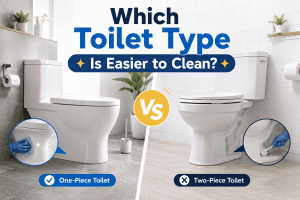
14. Do You Need a One-Piece or Two-Piece Toilet?
| Feature | One-Piece Toilet | Two-Piece Toilet |
|---|---|---|
| Appearance | Clean and integrated | Traditional |
| Cleaning | Fewer exterior joints | More visible connection area |
| Installation handling | Heavier single unit | Tank and bowl handled separately |
| Typical price | Often higher | Often more budget-friendly |
| Repair flexibility | Depends on model | Widely familiar configuration |
For a clean modern bathroom, a one-piece toilet can be attractive. For a practical family or rental bathroom, a two-piece model remains a very sensible option because of its familiar construction and broad availability.
15. Should You Buy a Dual-Flush Toilet?
Dual-flush toilets can be useful when the household regularly benefits from having separate reduced and full flush options.
However, the real-world benefit depends partly on how the toilet is used. EPA revised its WaterSense tank-type toilet specification in part because user selection of full-flush versus reduced-flush modes affects expected water savings. The current WaterSense program page notes that Version 2.0’s effective date is paused.
If your household frequently uses the full-flush button regardless of the type of waste, a dual-flush design may not deliver the savings you expected. In that situation, a well-performing single-flush WaterSense toilet can be the simpler choice.
16. Do Not Ignore the Toilet Seat
The seat is one of the parts you physically interact with every day, yet it is often an afterthought during toilet shopping.
Check whether you want:
- Standard or slow-close hinges
- Plastic or another seat material
- Easy-release hinges for cleaning
- A seat shape that matches the bowl
If the toilet does not include a seat, add the cost to your total purchase budget.
17. A Practical 2026 Toilet Buying Decision
If I were helping a homeowner choose a replacement toilet today, I would narrow the decision in this order:
- Step 1: Measure the rough-in.
- Step 2: Measure front and side clearance.
- Step 3: Choose round or elongated based on available space.
- Step 4: Choose a comfortable height for the people using it most.
- Step 5: Look for WaterSense certification.
- Step 6: Compare independently verified flushing performance.
- Step 7: Check cleaning and maintenance requirements.
- Step 8: Confirm replacement parts are easy to source.
- Step 9: Calculate toilet, seat, installation, and plumbing costs together.
- Step 10: Only then compare appearance and premium features.
This approach prevents one of the most common buying mistakes: spending most of the budget on appearance before confirming that the toilet actually fits the bathroom.
18. Common Toilet Buying Mistakes to Avoid
- Buying without measuring the rough-in.
- Choosing an elongated bowl for a bathroom that is too small.
- Assuming a lower GPF automatically means better efficiency.
- Ignoring the toilet’s flushing performance.
- Forgetting to budget for a seat and installation.
- Choosing a difficult-to-service toilet for a rental property.
- Ignoring the condition of the existing flange.
- Buying a smart toilet without considering electrical requirements and future repairs.
Related Toilet Category
Frequently Asked Questions
1. What is the most important thing to check before buying a new toilet?
The rough-in measurement is one of the most important checks because an incompatible toilet may not fit the existing drain location. After that, check bathroom clearance, bowl shape, height, flushing performance, and water efficiency.
2. Is 1.28 GPF a good toilet water-use rating?
Yes. A WaterSense-labeled residential toilet uses no more than 1.28 gallons per flush and must meet EPA criteria for both efficiency and performance.
3. Is an elongated toilet better than a round toilet?
Not universally. Elongated toilets are often preferred for comfort, while round-front toilets can be a better choice when bathroom space is limited.
4. Is a one-piece toilet better than a two-piece toilet?
A one-piece toilet can offer a cleaner appearance and fewer exterior joints, while a two-piece toilet is often easier to handle during installation and can be more budget-friendly. The better option depends on your bathroom, budget, and maintenance priorities.
5. How much should I spend on a new toilet?
There is no single ideal price. Instead, compare the complete cost of the toilet, seat, installation, plumbing modifications, and future maintenance. A moderately priced toilet with reliable performance can provide better long-term value than a premium model with features you do not need.
Conclusion: Buy the Toilet That Fits Your Bathroom and Your Daily Life
The best toilet for your home is not necessarily the newest, most expensive, or most feature-packed model. It is the one that fits the existing plumbing, works comfortably within the bathroom layout, flushes reliably, uses water efficiently, and can be maintained without unnecessary expense.
For most homeowners in 2026, I would start with the basics: rough-in, clearance, bowl shape, height, flushing performance, WaterSense certification, maintenance, replacement parts, and total installation cost.
Once those boxes are checked, then consider appearance, smart features, dual-flush controls, skirted designs, and other upgrades.
That order of priorities makes toilet shopping much less confusing—and it greatly reduces the chance of bringing home a toilet that looks perfect in the store but does not work well in your bathroom.