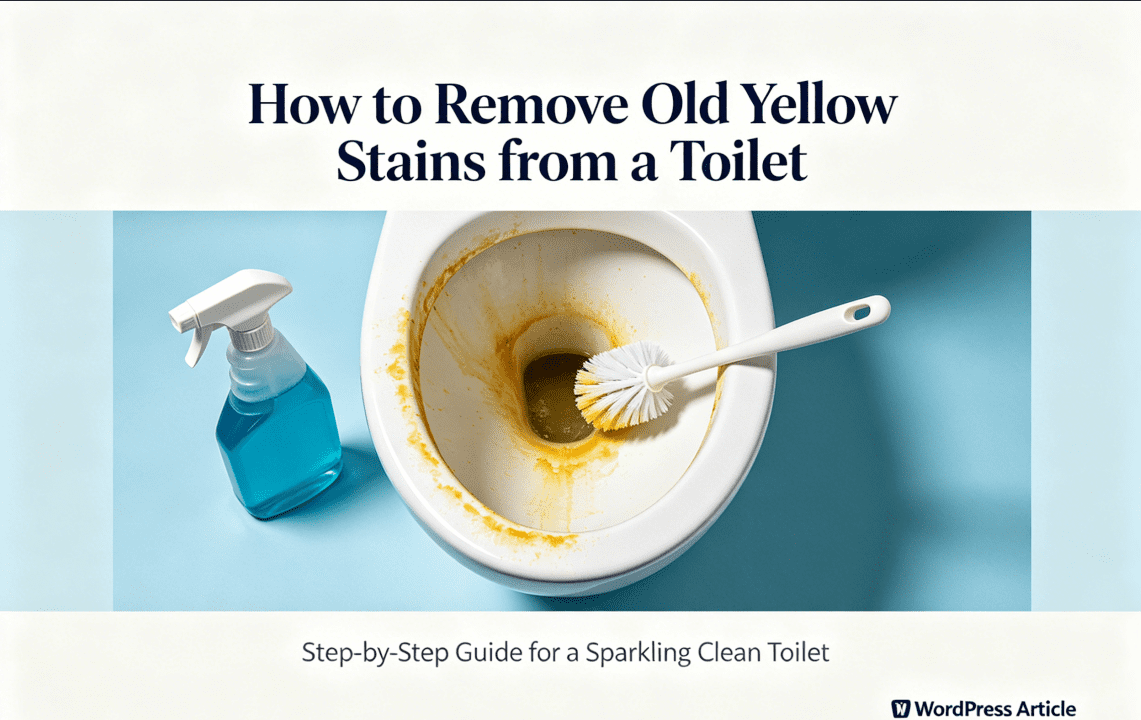
Old yellow stains in a toilet can be one of the most stubborn cleaning problems in any bathroom. Unlike fresh discoloration, these stains have often been building up for months or even years. They become rock-hard as layers of uric acid, calcium, magnesium, iron, and bacterial residue bond to the porcelain surface.
If you’ve scrubbed with ordinary toilet cleaner and nothing seems to work, don’t worry. In my experience maintaining rental properties, older homes, and hard-water bathrooms, even severe yellow stains can usually be removed without replacing the toilet. The key is using the right products and giving them enough time to dissolve the deposits.
This guide explains exactly how to remove old yellow stains from a toilet, which cleaning methods work best, and how to prevent the stains from returning.
Quick Answer
The best way to remove old yellow stains from a toilet is to use citric acid or white vinegar to soak the bowl overnight, then scrub with a toilet brush and, if necessary, a wet pumice stone. This method dissolves hardened uric acid and mineral deposits that ordinary cleaners cannot remove.
What Causes Old Yellow Toilet Stains?
Old yellow stains are typically caused by years of accumulated:
- Uric acid crystals from urine
- Hard water minerals such as calcium and magnesium
- Iron and rust deposits
- Bacterial biofilm
According to the U.S. Geological Survey (USGS), hard water is a major source of mineral scale in toilets and plumbing fixtures.
If you want to understand the root causes in more detail, read What Causes Yellow Stains in a Toilet Bowl?.
What You Need
- 1/2 to 1 cup citric acid powder (best option)
- Or 2 to 4 cups distilled white vinegar
- Toilet brush
- Rubber gloves
- Pumice stone
- Bucket or sponge (optional to lower water level)
Step-by-Step: How to Remove Old Yellow Stains
1. Turn Off the Water Supply
Close the shutoff valve behind the toilet if possible.
2. Flush and Lower the Water Level
Flush the toilet and use a sponge or brush to remove most of the remaining water so the cleaner can contact the stains directly.
3. Apply Citric Acid or Vinegar
Sprinkle citric acid on the stained areas or pour vinegar around the bowl and under the rim.
4. Let It Soak Overnight
For old stains, extended soaking is essential. Eight to twelve hours is ideal.
5. Scrub with a Toilet Brush
Most deposits will soften and begin to detach from the porcelain.
6. Use a Wet Pumice Stone
For thick crusty buildup, gently rub with a pumice stone while keeping both surfaces wet.
7. Flush and Inspect
Flush the toilet and repeat if any stubborn areas remain.
Vinegar vs Citric Acid vs CLR
| Method | Price | Difficulty | Maintenance | Advantages | Disadvantages |
|---|---|---|---|---|---|
| Citric acid | $8–$15 | Easy | Monthly | Highly effective and natural | Requires overnight soaking |
| White vinegar | $2–$4 | Easy | Monthly | Safe and inexpensive | Slower on heavy buildup |
| CLR | $10–$15 | Easy | As needed | Very strong on mineral deposits | Chemical odor |
| Pumice stone | $5–$10 | Moderate | Occasional | Removes hardened scale | Requires careful handling |
| Bleach | $4–$8 | Easy | Weekly | Disinfects well | Does not dissolve mineral scale |
Real-Life Example
I once restored a 15-year-old toilet in a rental property where the yellow ring had become nearly brown and felt like stone. After lowering the water level and soaking the bowl overnight with citric acid, about 80% of the buildup came off with a brush. A wet pumice stone removed the remaining deposits, and the porcelain looked almost new again.
When Vinegar Alone Is Enough
If the stains are visible but not thick or rough to the touch, vinegar is often sufficient. Our guide How to Remove Yellow Toilet Stains with Vinegar explains the complete natural cleaning method.
How to Prevent Old Stains from Returning
- Brush the toilet once per week.
- Use citric acid or vinegar monthly.
- Clean under the rim thoroughly.
- Flush rarely used bathrooms regularly.
- Install a water softener if your home has hard water.
If stains reappear shortly after cleaning, read Why Yellow Toilet Stains Keep Coming Back to identify the underlying cause.
Which Method Is Best for Your Situation?
- Light old stains: White vinegar overnight.
- Moderate mineral buildup: Citric acid soak.
- Heavy crust deposits: Citric acid plus pumice stone.
- Severe hard water problems: Water softener installation.
Frequently Asked Questions
1. Can old yellow stains be completely removed?
Yes. Most can be removed using citric acid, vinegar, and a pumice stone.
2. How long should the cleaner soak?
Overnight soaking is recommended for heavily built-up stains.
3. Is a pumice stone safe for toilets?
Yes, as long as both the stone and porcelain are kept wet.
4. Why doesn’t bleach work?
Bleach disinfects but does not dissolve mineral and uric acid deposits.
5. How do I stop old stains from returning?
Regular maintenance and hard water control are the most effective long-term solutions.
Conclusion
Old yellow toilet stains may look permanent, but they can usually be removed with patience and the right products. In my experience, citric acid is the most effective overall solution, while vinegar is an excellent natural alternative for lighter buildup.
By soaking the bowl overnight, scrubbing thoroughly, and using a wet pumice stone when needed, even years of mineral deposits can be removed. Once the stains are gone, regular maintenance and addressing hard water will keep your toilet looking clean for years to come.