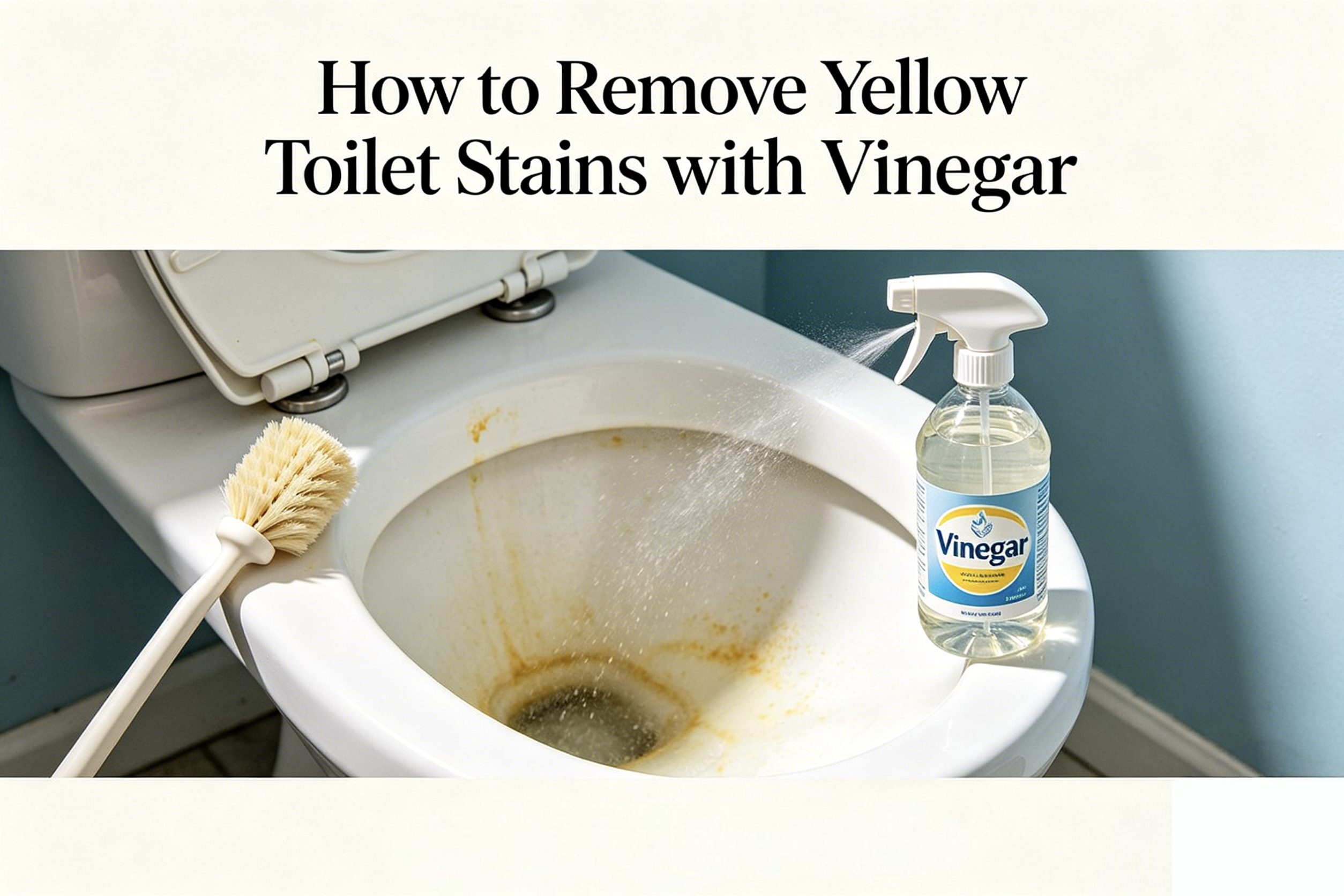
Yellow stains in a toilet bowl can make even a freshly cleaned bathroom look dirty. The good news is that you do not always need harsh chemicals to solve the problem. In many cases, ordinary white vinegar is one of the safest and most effective ways to break down mineral deposits and uric acid buildup.
Over the years, I have used vinegar to clean toilets in apartments, family homes, and rental properties. While it may not work as quickly as strong commercial descalers, vinegar is inexpensive, non-toxic, and highly effective for light to moderate yellow staining. For households with children, pets, or septic systems, it is often the best first solution to try.
This guide explains exactly how to remove yellow toilet stains with vinegar, when vinegar works best, and what to do if the stains are especially stubborn.
Quick Answer
To remove yellow toilet stains with vinegar, pour 2 to 4 cups of white vinegar into the bowl, let it soak for several hours or overnight, then scrub with a toilet brush. Vinegar’s mild acidity dissolves hard water minerals, uric acid deposits, and bacterial buildup naturally and safely.
Why Vinegar Works on Yellow Toilet Stains
White vinegar contains acetic acid, which helps dissolve:
- Hard water deposits (calcium and magnesium)
- Uric acid crystals from urine
- Soap residue
- Bacterial biofilm
According to the U.S. Geological Survey (USGS), hard water minerals are a leading cause of scale buildup in toilets and other bathroom fixtures.
If you want to understand the underlying causes in detail, read What Causes Yellow Stains in a Toilet Bowl?.
What You Need
- 2 to 4 cups of distilled white vinegar
- Toilet brush
- Rubber gloves
- Baking soda (optional)
- Pumice stone (optional for heavy deposits)
Step-by-Step: How to Remove Yellow Toilet Stains with Vinegar
1. Flush the Toilet
Start with a clean bowl and flush to wet all surfaces.
2. Lower the Water Level
Use a toilet brush to push water out of the bowl, exposing the stained areas for better contact.
3. Add White Vinegar
Pour 2 to 4 cups of white vinegar directly around the bowl, especially along the waterline and under the rim.
4. Let It Soak
Allow the vinegar to sit for at least 3 to 6 hours. For best results, leave it overnight.
5. Scrub Thoroughly
Use a toilet brush to loosen softened deposits.
6. Add Baking Soda (Optional)
Sprinkle one cup of baking soda for extra cleaning action and mild abrasion.
7. Use a Pumice Stone for Tough Stains
If rough mineral deposits remain, gently scrub with a wet pumice stone.
8. Flush to Rinse
Flush the toilet and inspect the bowl. Repeat if needed.
How Effective Is Vinegar?
| Stain Type | Vinegar Effectiveness | Typical Cost | Soaking Time | Advantages | Disadvantages |
|---|---|---|---|---|---|
| Light yellow ring | Excellent | $2–$4 | 3–6 hours | Natural and safe | Requires patience |
| Moderate hard water stains | Very Good | $2–$4 | Overnight | Low cost | May need scrubbing |
| Uric acid buildup | Good | $2–$4 | Overnight | Widely available | Slower than citric acid |
| Heavy mineral crust | Fair | $2–$4 | Overnight+ | Safe for porcelain | May require pumice stone |
| Years-old stains | Moderate | $2–$4 | Multiple treatments | Non-toxic | May not fully remove severe deposits |
Real-Life Example
A rental property owner I worked with in Florida had a toilet with a yellow ring that reappeared every two weeks. Instead of using harsh chemicals between tenants, we soaked the bowl overnight with white vinegar and added baking soda the next morning. After two treatments, the porcelain returned to its original color and remained cleaner for much longer.
When Vinegar Is the Best Choice
- You prefer non-toxic cleaning methods.
- Your home has children or pets.
- You use a septic system.
- The stains are light to moderate.
- You want a low-cost solution.
When Vinegar May Not Be Enough
Vinegar works well for most common stains, but severe mineral buildup may require stronger acids such as citric acid or specialized products like CLR.
For deeper cleaning methods, see Best Way to Remove Yellow Stains from a Toilet.
How to Prevent Yellow Stains from Returning
- Brush the toilet weekly.
- Use vinegar once per month as maintenance.
- Clean under the rim thoroughly.
- Flush rarely used bathrooms regularly.
- Install a water softener if you have hard water.
If the stains keep coming back shortly after cleaning, our guide Why Yellow Toilet Stains Keep Coming Back explains the underlying causes and permanent solutions.
Vinegar vs Other Cleaning Methods
- Vinegar: Natural, inexpensive, ideal for regular maintenance.
- Citric Acid: Stronger and faster on mineral deposits.
- CLR: Very effective but chemical-based.
- Bleach: Disinfects but does not remove scale well.
Frequently Asked Questions
1. How long should vinegar sit in the toilet?
At least 3 to 6 hours, though overnight soaking produces the best results.
2. Can vinegar damage porcelain?
No. White vinegar is safe for toilet bowls when used as directed.
3. Does vinegar remove hard water stains?
Yes. It gradually dissolves calcium and magnesium deposits.
4. Is baking soda necessary?
No, but it can improve cleaning performance and provide gentle abrasion.
5. How often should I clean with vinegar?
Once per month for maintenance, or as needed when yellow stains appear.
Conclusion
Removing yellow toilet stains with vinegar is one of the safest, most affordable, and most environmentally friendly cleaning methods available. With enough soaking time, vinegar effectively dissolves hard water minerals, uric acid deposits, and bacterial residue that cause unsightly yellow discoloration.
In my experience, vinegar is an excellent first-line solution for routine maintenance and moderate stains. For the best long-term results, combine monthly vinegar treatments with weekly brushing and address hard water issues if the stains continue to return.