
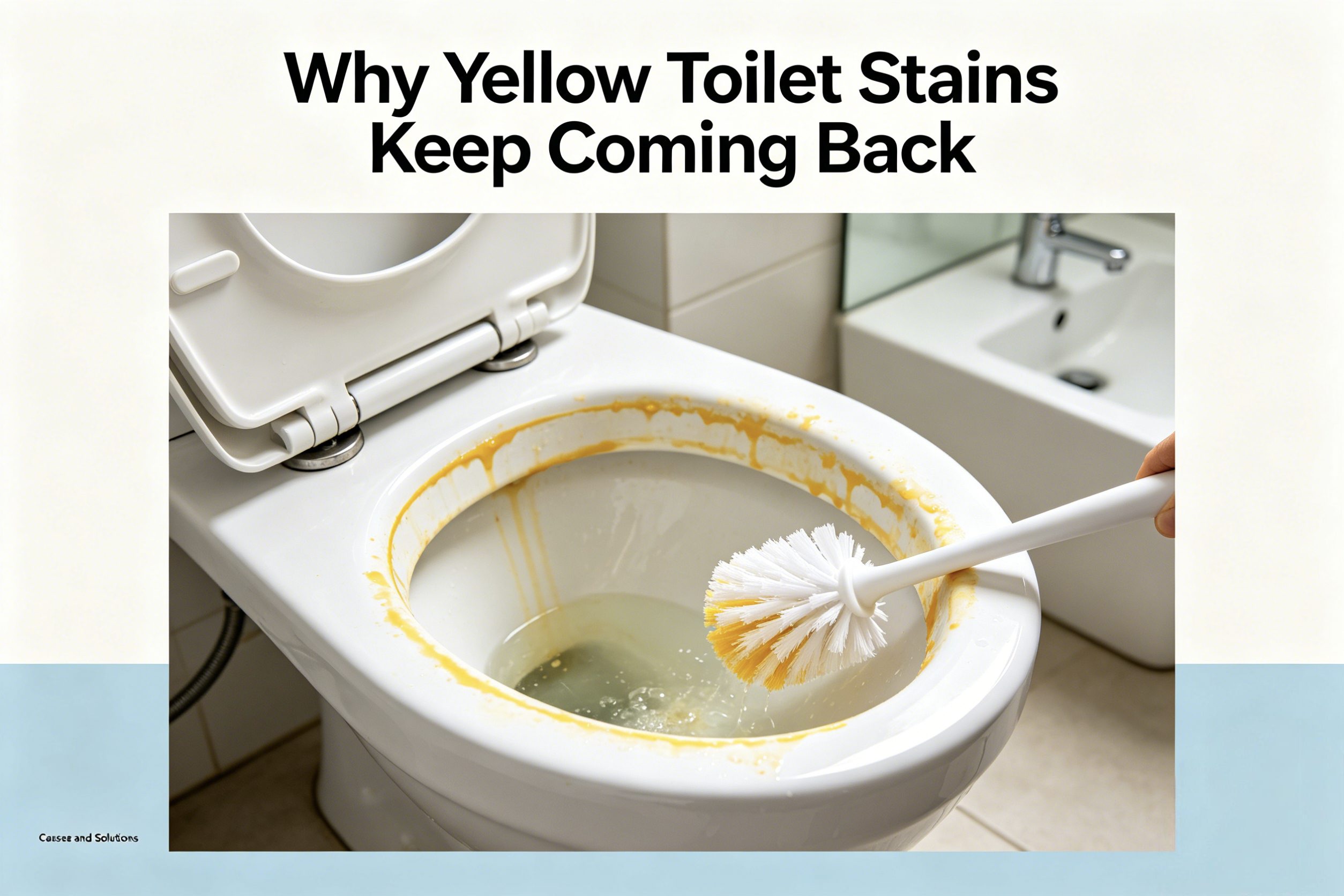
You scrub your toilet until it looks spotless, only to notice the same yellow ring returning a few days later. If this keeps happening, you’re not alone. Many homeowners assume they are using the wrong cleaner, but in reality the issue is usually caused by an underlying problem such as hard water, uric acid buildup, or hidden mineral deposits under the rim.
In my experience maintaining bathrooms in homes with both municipal water and private wells, recurring yellow toilet stains are almost always linked to a root cause that has not been fully addressed. Cleaning removes the visible discoloration, but unless the source is eliminated, the stains simply return.
This guide explains why yellow toilet stains keep coming back, how to identify the exact cause, and what you can do to stop them permanently.
Quick Answer
Yellow toilet stains keep coming back because uric acid, hard water minerals, bacteria, and iron deposits continue to accumulate after every flush. If the root cause is not treated—especially hard water or under-rim buildup—the stains will reappear even after thorough cleaning.
1. Hard Water Is the Most Common Reason
Hard water contains calcium and magnesium. Each flush leaves behind microscopic mineral deposits that gradually build into a yellow ring around the waterline.
According to the U.S. Geological Survey (USGS), hard water is common throughout many regions and is one of the leading causes of scale buildup in plumbing fixtures.
If your home has hard water, stains will continue to return until the mineral source is treated or removed regularly.
2. Uric Acid Deposits Remain Under the Rim
Even after cleaning the visible bowl surface, uric acid crystals often remain hidden beneath the toilet rim. These deposits dissolve slowly during flushing and seed new yellow stains within days.
To remove existing discoloration, read How to Remove Yellow Stains from a Toilet, which explains the most effective cleaning techniques.
3. Bleach Does Not Dissolve Mineral Deposits
Many homeowners rely on bleach because it whitens and disinfects. However, bleach does not break down calcium scale or uric acid crystals, which means the underlying buildup remains intact.
In my experience, citric acid and mineral-removing cleaners work much better than bleach for recurring yellow stains.
4. Bacterial Biofilm Regrows Quickly
Moist environments allow bacteria to form biofilm under the rim and around the waterline. This slimy layer traps minerals and organic residue, causing yellow or orange discoloration to return shortly after cleaning.
5. Iron in the Water Supply
If your home uses well water or older plumbing, dissolved iron can produce yellow-orange staining after each flush. These stains often resemble hard water deposits but may appear more rusty in color.
6. Cleaning Frequency Is Too Low
Toilets that are cleaned only once every few weeks allow deposits to harden. Once scale and uric acid crystallize, stains return much faster.
A simple weekly cleaning routine is usually enough to prevent recurring discoloration.
How to Diagnose Why the Stains Keep Returning
| Recurring Problem | Likely Cause | Typical Cost to Fix | Maintenance Required | Advantages | Disadvantages |
|---|---|---|---|---|---|
| Yellow ring every few days | Hard water minerals | $5–$20 | Monthly | Easy to treat with acids | Returns unless water is treated |
| Stains under rim | Uric acid buildup | $3–$15 | Weekly | Responds well to citric acid | Hidden and easy to miss |
| Orange-yellow discoloration | Iron or bacteria | $5–$25 | As needed | Often easy to identify | May indicate water quality issues |
| Heavy crust deposits | Years of buildup | $15–$40 | Occasional | Can be fully removed | Requires more effort |
| Persistent staining in all toilets | Hard water throughout home | $500–$3,000 | Minimal | Long-term solution | Higher upfront cost |
Real-Life Example
A homeowner in Nevada cleaned their toilet with bleach every weekend, yet the yellow ring always returned by Thursday. Water testing showed extremely high calcium hardness. After switching to monthly citric acid treatment and installing a compact water softener, the ring disappeared and weekly cleaning became much easier.
How to Stop Yellow Stains Permanently
- Use citric acid or a hard water cleaner monthly.
- Scrub under the toilet rim thoroughly.
- Brush the bowl once per week.
- Inspect the tank for rust or sediment.
- Install a water softener if hard water is severe.
- Flush rarely used toilets regularly.
Best Products for Recurring Yellow Stains
- Citric acid powder
- CLR Calcium, Lime & Rust Remover
- Lime-A-Way Toilet Cleaner
- Pumice stone
- Water softener systems
If deposits are already thick and hardened, our article How to Remove Old Yellow Stains from a Toilet covers advanced cleaning methods.
When Yellow Stains Mean a Bigger Problem
If every toilet in your home develops yellow rings within a few days, the underlying issue is usually water quality rather than cleaning technique.
For a detailed explanation of the root causes, read What Causes Yellow Stains in a Toilet Bowl?.
Frequently Asked Questions
1. Why do yellow stains come back so quickly?
Most often because hard water minerals and uric acid deposits remain after cleaning.
2. Does bleach stop yellow stains from returning?
No. Bleach disinfects but does not dissolve mineral scale or uric acid crystals.
3. How often should I clean my toilet?
Weekly cleaning is recommended, with monthly mineral-removal treatments.
4. What is the best natural cleaner?
Citric acid is highly effective at dissolving both uric acid and hard water deposits.
5. Should I install a water softener?
If hard water affects multiple fixtures in your home, a water softener can provide a long-term solution.
Conclusion
Yellow toilet stains keep coming back because the underlying source—usually hard water, uric acid, bacteria, or iron—continues to build up after every flush. Cleaning alone only removes the symptom; addressing the root cause is what prevents recurrence.
In my experience, the most effective long-term solution is a combination of weekly brushing, monthly citric acid treatment, and water softening where necessary. Once you eliminate the cause instead of just treating the stain, your toilet stays cleaner with far less effort.