Bathroom glass often loses its shine due to limescale and water deposits. From my experience in home renovation and cleaning, the key is to treat new limescale and stubborn old buildup differently. Using the right method ensures your glass stays crystal clear without damage.
Quick Answer: How to Make Bathroom Glass Shine Again
- New limescale: Use acidic solutions like vinegar or citric acid to soften deposits
- Old, stubborn limescale: Use a combination of strong chemical cleaners and careful physical abrasion
- Prevention: Daily wiping and glass scraping after showers drastically reduces buildup
In short: Softening first for new stains, strong cleaners for old, and consistent maintenance prevents water spots.
1. Removing New Limescale: Acidic Solution Softening
This is the most cost-effective method for daily accumulation of limescale.
Homemade Cleaning Solution
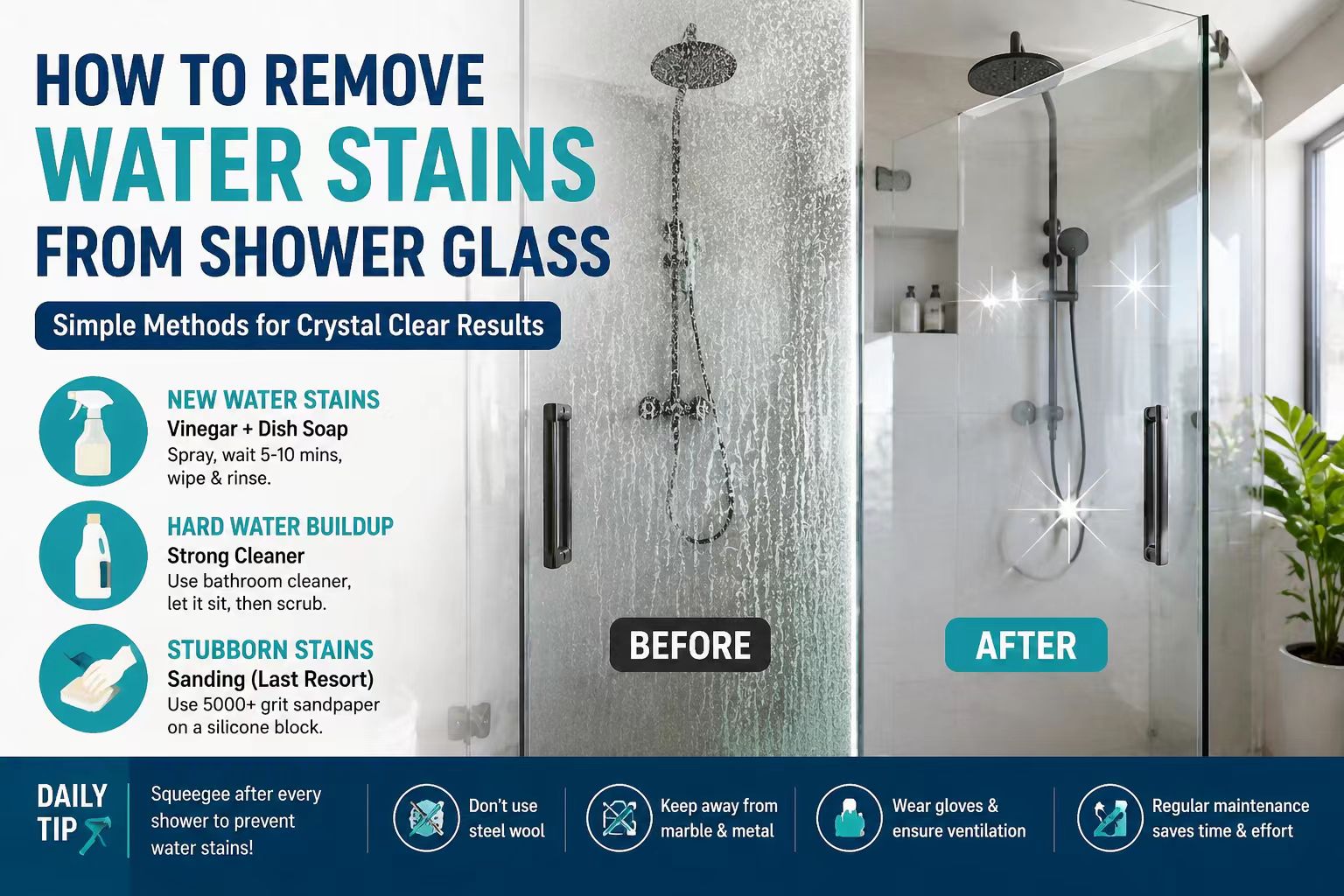
Mix white vinegar and dish soap in a 1:1 ratio and put it in a spray bottle. No additional water is needed.
- White vinegar dissolves the limescale
- Dish soap helps break down grease and grime
Step-by-Step Instructions
- Wipe off dust and water droplets from the glass with a dry cloth.
- Spray the homemade solution evenly on limescale deposits.
- Let it sit for 5–10 minutes to soften the buildup.
- Scrub gently with a cloth, a nano sponge, or a clean plastic bag balled up to avoid shedding fibers.
- Rinse thoroughly with water and use a glass scraper to dry the surface. The glass will be clear and less prone to fogging.
2. Removing Stubborn Old Limescale: Chemical + Physical Methods
When limescale forms a hard layer, acidic solutions may not be enough. Here’s how to tackle it:
Strong Chemical Cleaners
Use bathroom-specific cleaners or descaling products designed for tiles and glass (avoid cleaners meant for toilets on glass). Wear gloves and ensure proper ventilation. Spray on the deposits, let sit, then wipe clean.
Physical Abrasion (Last Resort)
For extremely stubborn limescale:
- Tools: Wrap 5000-grit or higher wet/dry sandpaper around a silicone block
- Important: Keep glass completely dry; wet glass reduces friction and cleaning efficiency
- Effectiveness: Physically removes hardened deposits but is time-consuming and risks scratching glass
Comparison Table: Methods for Different Levels of Limescale
| Method | Best For | Effectiveness | Cost | Effort / Difficulty | Notes |
|---|---|---|---|---|---|
| Vinegar + Dish Soap | Light / New Limescale | Medium | Low | Easy | Eco-friendly, safe for daily cleaning |
| Baking Soda + Vinegar | Moderate Limescale | Medium-High | Low | Moderate | Acid-base reaction helps dissolve deposits faster |
| Strong Chemical Cleaner | Old / Stubborn Limescale | High | Medium | Moderate | Wear gloves and ensure ventilation; follow instructions |
| Physical Abrasion (Sandpaper / Silicone Block) | Severe / Calcified Limescale | Very High | Low-Medium | High | Last resort; risk of scratching glass, keep dry |
| Cola / Emergency Hack | Light / Quick Fix | Low-Medium | Low | Easy | Phosphoric acid helps dissolve deposits; rinse thoroughly |
Real-World Usage Recommendations
- Daily light buildup: Vinegar + dish soap spray after each shower
- Moderate buildup: Use a commercial bathroom glass cleaner weekly
- Severe old limescale: Physical abrasion combined with strong chemicals
- Prevention: Wipe glass with a squeegee after each use
For related bathroom maintenance tips, see our toilet stain removal guide and toilet comparison guide.
Learn more about safe cleaning products on Consumer Reports.
Cleaning FAQs: Bathroom Glass and Limescale
1. Can I use vinegar on all types of glass?
Yes, but avoid contact with marble and metal fittings as acids can corrode them.
2. How often should I clean my bathroom glass?
Ideally, after every shower using a squeegee or microfiber cloth for best results.
3. Is physical abrasion safe?
Only as a last resort and with very fine sandpaper; wet glass or protective films may be damaged.
4. Will regular maintenance prevent limescale completely?
Not entirely, but consistent wiping drastically reduces buildup and effort.
5. Are commercial cleaners better than homemade solutions?
They are stronger for tough stains, but homemade vinegar solutions are safe, eco-friendly, and effective for daily cleaning.
Conclusion
Restoring bathroom glass to a sparkling finish depends on treating limescale according to its severity. For new buildup, vinegar and dish soap soften deposits effectively. For old, stubborn limescale, strong chemical cleaners and careful physical abrasion are needed. The most important step is prevention—wipe and scrape glass after each shower to keep it clear and shine effortlessly every day.