
Buying a new sofa is an exciting upgrade for any home, but many homeowners make the same mistake: they fall in love with a sofa design first and check the measurements later.
A sofa that looks perfect in a showroom may feel completely different when placed inside your living room. It may block walkways, cover windows, make the room feel crowded, or even fail to fit through your doorway.
Learning how to measure your living room for a new sofa is one of the most important steps before making a purchase. From my experience helping with home renovation projects, accurate measurements can prevent expensive returns and help you choose a sofa that fits both your space and lifestyle.
Quick Conclusion: How to Measure Your Living Room Before Buying a Sofa
Before buying a new sofa, measure these five areas:
- Available sofa space: The maximum width, depth, and height your room can support.
- Doorways and entrances: Make sure the sofa can physically enter your home.
- Walking paths: Keep enough space for comfortable movement.
- Existing furniture: Check how the sofa works with tables, chairs, and cabinets.
- Room proportions: Match sofa size with the overall room size.
A good rule is to leave around 30–36 inches of walking space in main pathways and avoid filling more than two-thirds of your living room width with a sofa.
Why Measuring Your Living Room Matters Before Buying a Sofa
Many sofa shopping problems happen because homeowners only measure the wall length. However, a living room is a three-dimensional space, and several factors affect whether a sofa will work.
A sofa can fit along a wall but still create problems because:
- The depth is too large for the room.
- The back height blocks windows.
- The arms make the sofa feel oversized.
- The doorway is too narrow for delivery.
- The layout prevents comfortable movement.
A few minutes spent measuring can save hours of frustration later.
Step 1: Measure Your Living Room Space
Measure the Available Sofa Area
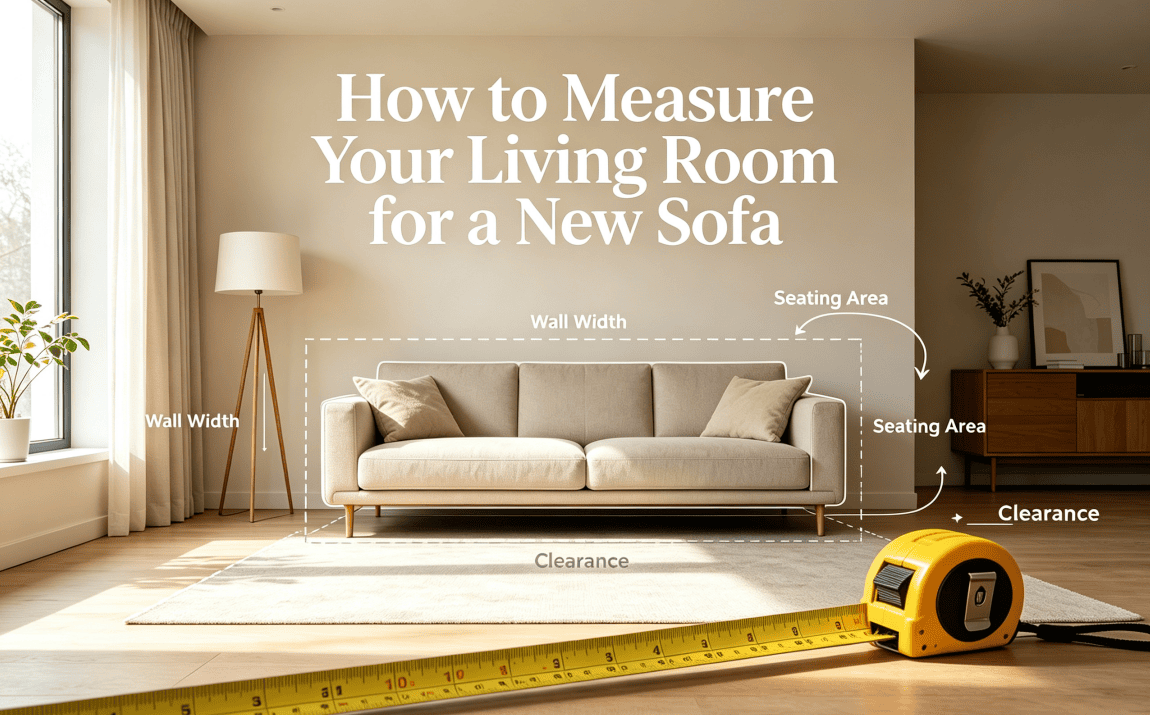
Start by identifying where the sofa will be placed. Measure the full available area, including:
- Wall length
- Distance between walls
- Space near windows
- Distance from TV or entertainment areas
Do not measure only the empty wall. Consider how the sofa will interact with the entire room layout.
For example, a 100-inch wall does not always mean you should buy a 100-inch sofa. You need space for side tables, lamps, and comfortable movement.
Step 2: Measure Sofa Width, Depth, and Height
| Measurement | Why It Matters | Recommended Consideration |
|---|---|---|
| Sofa Width | Determines whether it fits your wall and furniture layout | Leave extra space on both sides |
| Sofa Depth | Affects walking space and comfort | Small rooms usually need shallower sofas |
| Sofa Height | Impacts visual balance and window clearance | Avoid blocking windows or shelves |
| Arm Width | Changes usable seating area | Thinner arms save space |
Step 3: Check Doorways, Hallways, and Stairs
One of the most overlooked steps is measuring the route from your entrance to the final sofa location.
Before ordering, measure:
- Front door width
- Interior door width
- Hallway width
- Elevator dimensions
- Staircase turns
A sofa may fit perfectly in your living room but still fail to enter your home.
For sectional sofas or large sofas, also check whether removable legs or modular pieces are available. These features can make delivery much easier.
Step 4: Consider Your Living Room Layout
The correct sofa size depends on how you use your living room.
| Living Room Type | Recommended Sofa Choice | Reason |
|---|---|---|
| Small apartment | Compact loveseat or small sectional | Saves space while providing seating |
| Family living room | Large sectional sofa | Provides more seating for daily use |
| Open-plan home | Floating sofa arrangement | Helps divide living areas |
| Narrow living room | Slim-depth sofa | Keeps walking paths open |
Sofa Size Guide Based on Room Size
| Room Size | Recommended Sofa Size | Best Options |
|---|---|---|
| Small living room (under 150 sq ft) | 60–80 inches | Loveseat, apartment sofa |
| Medium living room (150–250 sq ft) | 80–100 inches | Standard three-seat sofa |
| Large living room (250+ sq ft) | 100+ inches | Sectional or oversized sofa |
Real Home Renovation Experience: Common Sofa Measuring Mistakes
During living room renovation projects, I often see homeowners choose sofas based on appearance rather than proportion.
One common example is buying a deep sectional sofa for a small apartment. The sofa itself may be comfortable, but it reduces walking space and makes the room feel smaller.
Another mistake is ignoring sofa height. A tall sofa placed under a low window can make the room look unbalanced.
The best sofa is not always the largest one. It is the sofa that fits your lifestyle while maintaining comfortable movement around the room.
Measuring Tips Before Ordering a New Sofa
- Use painter’s tape on the floor to mark the sofa size before buying.
- Measure furniture placement from multiple angles.
- Consider future furniture additions.
- Check whether cushions or arms increase the actual size.
- Confirm manufacturer measurements before placing an order.
Related Living Room Sofa Guides
For general furniture safety and home design considerations, homeowners can also refer to professional resources from
Ashley Furniture.
Frequently Asked Questions About Measuring for a New Sofa
1. How much space should I leave around a sofa?
Most living rooms should have around 30–36 inches of comfortable walking space around major pathways. Smaller spaces may require a more compact layout.
2. Should I measure the sofa before or after buying it?
Always check sofa dimensions before purchasing. Measure your room first, then compare those measurements with the sofa specifications.
3. How do I know if a sofa will fit through my doorway?
Measure every entry point, including doors, hallways, elevators, and stair turns. Compare these measurements with the sofa’s packaged dimensions.
4. Is a sectional sofa suitable for a small living room?
Yes, but choose a compact sectional with a smaller depth and flexible layout. Large sectionals can overwhelm small rooms.
5. What is the most important sofa measurement?
Sofa width is important, but depth is often overlooked. A sofa that is too deep can make a small living room uncomfortable even if the width fits.
Conclusion: Measure First, Buy Smarter
Choosing a new sofa is not only about finding a beautiful design. The right sofa should fit your living room dimensions, match your lifestyle, and allow comfortable movement.
Before buying, measure your room, check delivery paths, compare sofa dimensions, and visualize the layout. These simple steps can help you avoid costly mistakes and create a living room that feels balanced and comfortable.
A well-measured sofa is not just furniture—it becomes the foundation of a functional and welcoming living space.