A kitchen storage rack may seem like a small addition, but it can completely change how your kitchen feels and functions. When countertops become crowded with appliances, cooking tools, and daily essentials, the right storage solution can create more usable space and make everyday cooking much easier.
One of the most common questions homeowners ask is: Should I choose a wall-mounted kitchen storage rack or a freestanding kitchen storage rack?
The answer depends on your kitchen layout, available space, storage needs, and whether you prefer a permanent organization system or a flexible one. After helping homeowners improve kitchens of different sizes, I’ve found that both options have clear advantages — but they serve very different lifestyles.
Quick Answer: Which Kitchen Storage Rack Is Better?
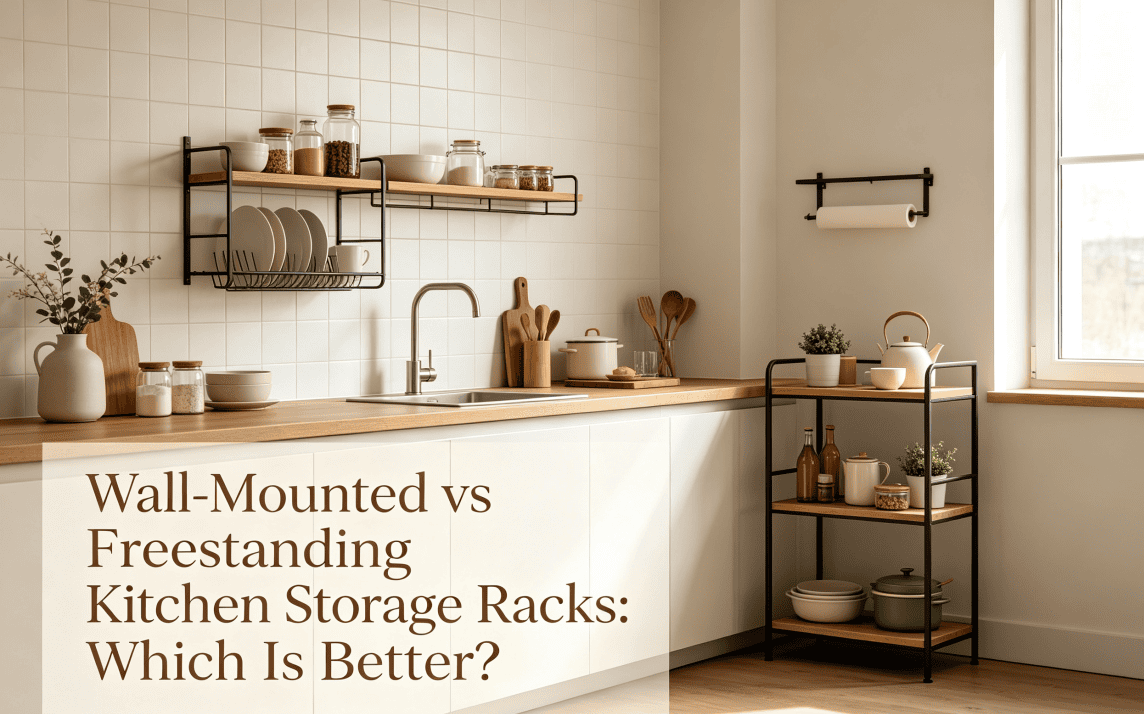
Wall-mounted kitchen storage racks are usually better for small kitchens because they save floor space and create a cleaner countertop area.
Freestanding kitchen storage racks are better for renters, larger kitchens, or homeowners who need flexible storage that can be moved easily.
For most small apartments, a wall-mounted rack provides better space efficiency. For temporary homes or kitchens that frequently change layouts, a freestanding rack is often the smarter investment.
If you are still planning your kitchen organization system, our guide What Is a Kitchen Storage Rack and Why Do You Need One? explains how storage racks improve kitchen functionality.
Why Choosing the Right Kitchen Storage Rack Matters
Modern kitchens often struggle with limited storage space. According to many kitchen design studies, homeowners commonly use countertops as temporary storage areas because cabinets are not always arranged efficiently.
A well-designed storage rack can help you:
- Reduce countertop clutter
- Create additional vertical storage
- Keep cooking tools within reach
- Improve kitchen workflow
- Make small kitchens feel more spacious
- Organize frequently used items
However, choosing the wrong type can create new problems. A heavy wall rack installed incorrectly may damage the wall, while a large freestanding rack may make a small kitchen feel crowded.
Wall-Mounted vs Freestanding Kitchen Storage Racks Comparison
| Feature | Wall-Mounted Rack | Freestanding Rack |
|---|---|---|
| Average Price | $30–$200 | $40–$300 |
| Installation | Requires drilling and fixing hardware | No permanent installation |
| Space Efficiency | Excellent for small kitchens | Requires floor space |
| Mobility | Fixed position | Easy to move |
| Maintenance | Easy cleaning but harder to relocate | Easy cleaning and adjustment |
| Weight Capacity | Depends on wall strength | Usually higher stability |
| Best For | Apartments and compact kitchens | Flexible kitchen layouts |
Wall-Mounted Kitchen Storage Racks: Pros and Cons
Wall-mounted storage racks use vertical wall space instead of occupying valuable countertop or floor areas. This makes them especially popular in apartments, small kitchens, and minimalist designs.
Advantages of Wall-Mounted Racks
- Maximize unused wall space: Walls above countertops often remain empty, making them perfect for additional storage.
- Keep countertops clear: Frequently used items such as knives, spices, and cooking utensils can be stored vertically.
- Create a cleaner appearance: A properly organized wall rack can make a kitchen look more modern.
- Improve cooking efficiency: Essential tools stay within arm’s reach.
Disadvantages of Wall-Mounted Racks
- Installation requires drilling.
- Incorrect installation may damage walls.
- Not ideal for renters who cannot modify walls.
- Weight capacity depends on wall structure.
Real-Life Example: When Wall-Mounted Racks Work Best
I once worked with a homeowner who had a kitchen of less than 50 square feet. The biggest problem was not the lack of cabinets, but the amount of equipment occupying the countertop.
After installing a stainless steel wall-mounted rack above the preparation area, the homeowner moved spice containers, cooking utensils, and knives off the counter. The kitchen immediately felt larger because the horizontal workspace was restored.
This type of solution works especially well for:
- Studio apartments
- Small condos
- Narrow kitchens
- Minimalist interiors
- Home cooks who need quick access to tools
Freestanding Kitchen Storage Racks: Pros and Cons
Freestanding racks are independent storage units that stand directly on the floor or countertop. They are popular because they require no drilling and can be repositioned whenever needed.
Advantages of Freestanding Racks
- No installation required: Simply place the rack where storage is needed.
- Flexible arrangement: Easy to move during cleaning or kitchen remodeling.
- Higher storage capacity: Many models include multiple shelves.
- Rental-friendly: Perfect for apartments where wall modifications are not allowed.
Disadvantages of Freestanding Racks
- Consumes valuable floor or countertop space.
- May look bulky in small kitchens.
- Requires more cleaning around the base.
- Lower models may become unstable if overloaded.
For homeowners with larger kitchens, freestanding racks often provide more storage capacity than wall-mounted options.
Which Kitchen Storage Rack Should You Choose?
The best choice depends on how you use your kitchen every day. Instead of choosing based only on appearance, consider your available space, storage habits, and long-term needs.
| Kitchen Situation | Recommended Rack | Why |
|---|---|---|
| Small apartment kitchen | Wall-mounted rack | Saves valuable floor and countertop space |
| Rental apartment | Freestanding rack | No drilling or permanent changes required |
| Large family kitchen | Freestanding multi-level rack | Provides more storage capacity |
| Minimalist kitchen design | Wall-mounted rack | Keeps surfaces clean and organized |
| Frequent kitchen remodeling | Freestanding rack | Easy to relocate |
Material Matters: What Kitchen Rack Material Is Best?
The material of your kitchen storage rack directly affects durability, cleaning, and appearance. A good rack should handle humidity, cooking steam, and daily use.
| Material | Advantages | Disadvantages | Best Use |
|---|---|---|---|
| Stainless Steel | Rust-resistant, strong, easy to clean | Higher price | Modern kitchens and heavy use |
| Aluminum | Lightweight and corrosion-resistant | Lower weight capacity | Small kitchens |
| Carbon Steel | Very strong and affordable | Needs protective coating | Heavy storage needs |
| Wood | Warm natural appearance | Requires more maintenance | Decorative kitchens |
For most homeowners, stainless steel remains the safest long-term choice because kitchens are naturally exposed to moisture, heat, and frequent cleaning.
Installation Tips for Wall-Mounted Kitchen Storage Racks
A wall-mounted rack is only as strong as its installation. Many storage problems happen because homeowners install heavy racks without checking the wall structure.
- Locate wall studs whenever possible.
- Use appropriate anchors for drywall installation.
- Avoid placing extremely heavy items on lightweight racks.
- Keep enough distance from the stove to prevent grease buildup.
- Check that the rack is level before tightening screws.
In my experience, spending an extra 15 minutes on proper installation can prevent years of frustration. A securely installed rack feels safer and performs much better during daily use.
Maintenance Tips for Kitchen Storage Racks
Kitchen racks are exposed to oil, steam, dust, and food particles. Regular maintenance keeps them looking clean and extends their lifespan.
- Clean stainless steel racks weekly with mild soap and water.
- Dry metal surfaces after cleaning to prevent water marks.
- Avoid harsh chemicals that may damage protective coatings.
- Remove expired food items regularly.
- Check screws and joints every few months.
A simple cleaning routine can help a quality kitchen storage rack last more than 10 years.
Common Mistakes When Buying Kitchen Storage Racks
- Buying a rack that is too large: A bigger rack is not always better. It may reduce movement space in a small kitchen.
- Ignoring weight capacity: Storing heavy cookware requires stronger construction.
- Choosing appearance over function: A beautiful rack that cannot hold your daily items is not practical.
- Ignoring cleaning requirements: Complex designs often collect more grease and dust.
Before purchasing, measure your available area and list the items you actually need to store. This prevents buying a rack that looks good but does not solve your storage problems.
Frequently Asked Questions
1. Are wall-mounted kitchen storage racks better for small kitchens?
Yes. Wall-mounted racks are usually the better option for small kitchens because they use vertical space and keep countertops available for food preparation.
2. Can a wall-mounted kitchen rack hold heavy cookware?
Yes, but only if it is installed correctly and attached to a suitable wall structure. Always check the manufacturer’s weight rating before storing heavy pots and pans.
3. Are freestanding kitchen storage racks suitable for renters?
Yes. Freestanding racks are ideal for renters because they require no drilling and can be moved when changing homes.
4. Which kitchen rack material lasts the longest?
Stainless steel is generally the most durable choice because it resists rust, handles moisture well, and requires minimal maintenance.
5. How do I choose the right size kitchen storage rack?
Measure your available wall or floor space first, then choose a rack that provides enough storage without blocking movement or workspace.
Expert Recommendation: Wall-Mounted or Freestanding?
For homeowners with limited kitchen space, I usually recommend a wall-mounted storage rack because it creates storage without sacrificing valuable floor area.
For renters, large families, or people who frequently reorganize their kitchen, a freestanding rack offers more flexibility.
The best kitchen storage solution is not always the largest one. It is the rack that matches your daily habits and makes your kitchen easier to use.
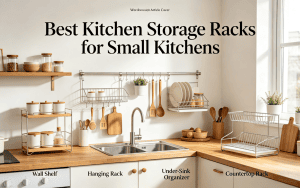
If you are planning a complete small kitchen organization project, our guide Best Kitchen Storage Racks for Small Kitchens provides additional ideas for maximizing limited space.
Conclusion
Both wall-mounted and freestanding kitchen storage racks can improve organization, but they solve different problems.
Wall-mounted racks are the better choice for small kitchens, minimalist designs, and homeowners who want maximum space efficiency. They create additional storage without taking away countertop or floor space.
Freestanding racks are better for flexibility, rental homes, and kitchens that require larger storage capacity. They are easy to move and adapt as your needs change.
Before choosing a kitchen storage rack, consider your kitchen size, installation limitations, storage habits, and future needs. A well-selected rack can make cooking more enjoyable, reduce clutter, and create a more functional kitchen environment.