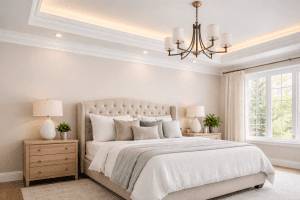
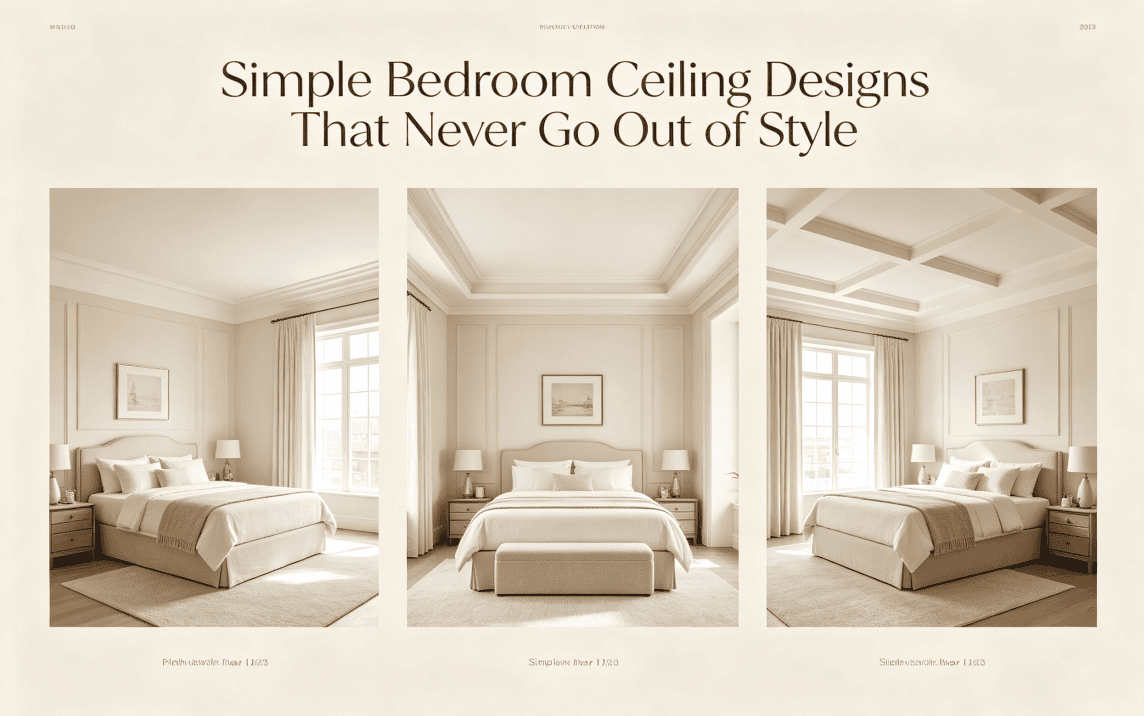
A bedroom ceiling is often overlooked during home renovation, but it plays a bigger role than most homeowners realize. The ceiling affects how spacious the room feels, how lighting is distributed, and even how relaxing the entire bedroom atmosphere becomes.
Many people think creating a beautiful bedroom ceiling requires complicated designs or expensive materials. In reality, some of the most timeless bedroom ceilings are surprisingly simple. A clean flat ceiling, subtle layered design, or well-planned lighting can completely transform a bedroom without making the space feel crowded.
After working on many residential renovation projects, I have found that homeowners usually prefer ceiling designs that remain attractive for years instead of following short-lived trends. This guide explores simple bedroom ceiling ideas that combine practicality, beauty, and long-term value.
Quick Answer: What Bedroom Ceiling Designs Never Go Out of Style?
The most timeless bedroom ceiling designs are flat ceilings, minimalist tray ceilings, simple double-layer ceilings, floating ceilings with hidden lighting, and ceilings without decorative drops.
These designs work because they create visual depth while maintaining a clean appearance. They also adapt easily to different interior styles, from modern minimalist homes to classic bedrooms.
If you are planning a complete bedroom renovation, our related guide What Is the Best Ceiling Design for a Bedroom? explains how ceiling height, lighting, and room size influence your final choice.
Why Simple Ceiling Designs Remain Popular
Interior trends change quickly, but simple ceiling designs continue to appear in homes because they solve practical problems.
- They make bedrooms feel larger and brighter.
- They match different furniture styles.
- They are easier to maintain.
- They usually cost less than complex decorative ceilings.
- They allow future lighting upgrades.
A bedroom should feel comfortable and relaxing. Overly complicated ceilings can sometimes make a small room feel lower or visually crowded.
Comparison of Popular Simple Bedroom Ceiling Designs
| Ceiling Design | Average Cost | Installation Difficulty | Maintenance | Main Advantage | Main Limitation |
|---|---|---|---|---|---|
| Flat Ceiling | $ | Easy | Very Low | Clean and timeless | Less decorative depth |
| Double-Layer Ceiling | $$ | Medium | Low | Adds modern dimension | Requires skilled installation |
| Tray Ceiling | $$$ | Medium | Low | Makes rooms look elegant | Needs sufficient ceiling height |
| Floating Ceiling | $$$ | Medium | Medium | Creates luxury lighting effects | Higher installation cost |
| No False Ceiling | $ | Easy | Very Low | Maximizes ceiling height | Less hidden wiring space |
1. Flat Ceiling Design — The Most Timeless Choice
The traditional flat ceiling remains one of the safest choices for bedrooms. It creates a smooth, uninterrupted surface that works with almost every decorating style.
A simple white flat ceiling paired with recessed lighting or a modern ceiling lamp can make a bedroom appear cleaner and more spacious.
Advantages:
- Lowest installation cost
- Easy to repair and repaint
- Works well in small bedrooms
- Does not reduce ceiling height
- Matches any furniture style
Best for:
Small apartments, rental properties, minimalist bedrooms, and homeowners who prefer simple designs.
In smaller bedrooms, I often recommend keeping the ceiling completely flat and focusing on lighting design instead. A well-positioned LED strip or recessed light can create more visual impact than complicated ceiling shapes.
2. Minimalist Double-Layer Ceiling — Modern and Practical
The double-layer ceiling has become popular in modern homes because it adds depth without overwhelming the room.
This design usually creates a narrow recessed border around the ceiling edge. Combined with hidden LED lighting, it creates a soft floating effect.
Advantages:
- Creates architectural detail
- Improves bedroom atmosphere
- Works well with modern interiors
- Allows hidden lighting installation
Disadvantages:
- Costs more than a flat ceiling
- Requires accurate construction
- Not ideal for very low ceilings
Real renovation experience: In bedrooms with ceiling heights below 2.6 meters, I usually avoid deep ceiling drops. A thin double-layer design of around 5–10 cm can add detail without making the room feel shorter.
3. Floating Ceiling Design — A Luxury Look Without Excess Decoration
A floating ceiling creates the illusion that the ceiling is separated from the walls. Hidden LED strips placed around the edges produce a soft glow that makes the bedroom feel warmer.
This design is especially popular in contemporary homes because it creates a hotel-style atmosphere.
Advantages:
- Creates premium visual effects
- Enhances nighttime atmosphere
- Works well with smart lighting systems
- Hides wiring and imperfections
Disadvantages:
- Higher construction cost
- Requires careful lighting installation
- Needs occasional LED maintenance
4. No False Ceiling — The Best Option for Low Bedrooms
Not every bedroom needs a suspended ceiling. In many modern homes, keeping the original ceiling height creates a more comfortable feeling.
A simple painted ceiling combined with a stylish ceiling light can look clean and sophisticated.
Advantages:
- Maximum ceiling height
- Lowest renovation cost
- No maintenance issues
- Suitable for small spaces
This option is especially recommended for apartments where every centimeter of height matters.
How to Choose a Ceiling Design Based on Your Bedroom Type
| Bedroom Situation | Recommended Ceiling Design | Reason |
|---|---|---|
| Small bedroom under 12㎡ | Flat ceiling or no false ceiling | Keeps the room visually larger |
| Modern master bedroom | Floating ceiling | Adds luxury atmosphere |
| Low ceiling room | Simple flat design | Avoids reducing height |
| Luxury renovation | Tray or layered ceiling | Creates architectural character |
| Budget renovation | Flat ceiling with lighting upgrade | Best value improvement |
Bedroom Ceiling Lighting Tips
The ceiling design itself is only half of the result. Lighting determines whether the design feels comfortable or outdated.
- Use warm white lighting around 2700K–3000K for relaxing bedrooms.
- Avoid overly bright central lights that create harsh shadows.
- Combine ambient lighting with reading lights.
- Use recessed lights carefully to avoid glare.
- Consider dimmable lighting for different moods.
For homeowners interested in creating a modern bedroom atmosphere, our guide Best Bedroom Ceiling Ideas for Modern Homes covers additional design combinations and lighting approaches.
Frequently Asked Questions
1. What is the most popular bedroom ceiling design?
Flat ceilings and minimalist layered ceilings remain the most popular because they are affordable, easy to maintain, and match many interior styles.
2. Which ceiling design makes a bedroom look bigger?
Flat ceilings, light colors, and hidden lighting can make bedrooms appear taller and more spacious.
3. Are false ceilings good for bedrooms?
Yes. False ceilings can improve lighting, hide wiring, and create decorative effects, but they should be carefully designed to avoid reducing room height.
4. How much height does a false ceiling reduce?
Most bedroom false ceilings reduce height by approximately 5–20 cm depending on the design and lighting requirements.
5. Which ceiling design requires the least maintenance?
A simple flat painted ceiling requires the least maintenance because it has fewer joints, materials, and lighting components.
Conclusion
The best bedroom ceiling designs are not always the most complicated ones. Simple designs such as flat ceilings, minimalist double-layer ceilings, floating ceilings, and clean no-false-ceiling solutions continue to stay popular because they balance beauty, practicality, and long-term value.
When choosing your bedroom ceiling, consider your ceiling height, room size, lighting needs, budget, and future maintenance. A well-designed ceiling should improve your daily living experience while remaining attractive for many years.
For professional guidance on residential ceiling materials and construction standards, you can also refer to resources from This Old House, which provides practical home improvement information for homeowners.