A bedroom should be more than just a place to sleep. It should feel relaxing, comfortable, and visually balanced. While furniture and wall colors often receive the most attention, the ceiling is one design element that can completely transform the atmosphere of a room.
Modern ceiling designs are no longer limited to decorative luxury homes. Thanks to new materials, energy-efficient lighting, and minimalist design trends, homeowners can create elegant bedroom ceilings without spending a fortune. Whether you’re renovating a master bedroom, decorating a guest room, or designing a new home, choosing the right ceiling style can make your space appear brighter, larger, and more inviting.
If you’re still deciding which ceiling style fits your room, you may also find our guide on How to Choose the Right Bedroom Ceiling Design helpful before selecting a specific design.
Quick Answer
The best bedroom ceiling for modern homes depends on your room size, ceiling height, budget, and lighting preferences. For most homeowners, minimalist tray ceilings, floating ceilings with LED lighting, and simple double-layer ceilings offer the perfect balance of beauty, affordability, and easy maintenance.
- Small bedrooms: Flat ceiling or simple single-layer ceiling
- Medium bedrooms: Minimalist double-layer (“double eyelid”) ceiling
- Luxury master bedrooms: Floating ceiling with hidden LED lighting
- Low ceilings: No ceiling drop or ultra-thin recessed ceiling
- Modern minimalist homes: Clean geometric lines with indirect lighting
Why Ceiling Design Matters More Than Most People Think
Many homeowners focus on flooring, furniture, and paint colors but overlook the ceiling. In reality, the ceiling occupies nearly one-sixth of your visible living space, making it a significant part of the room’s visual balance.
A thoughtfully designed ceiling can:
- Create the illusion of higher ceilings
- Improve overall lighting quality
- Hide electrical wiring and air conditioning ducts
- Reduce visual clutter
- Add architectural depth without overcrowding the room
- Increase resale appeal for modern homes
Interior designers often consider ceiling lighting one of the easiest ways to improve a bedroom’s atmosphere without changing the entire layout.
6 Best Bedroom Ceiling Ideas for Modern Homes
1. Flat Ceiling with Minimalist Lighting
The flat ceiling remains the most popular choice for modern homes because of its simplicity and versatility.
Instead of decorative moldings, homeowners combine smooth ceilings with recessed spotlights or slim LED fixtures for a clean appearance.
Best for:
- Apartments
- Small bedrooms
- Scandinavian interiors
- Modern minimalist homes
Recommended lighting:
- Flush ceiling light
- Recessed LED downlights
- Magnetic track lighting
2. Double-Layer (“Double Eyelid”) Ceiling
One of today’s most popular modern ceiling styles is the double-layer ceiling, sometimes nicknamed the “double eyelid” design because of its clean recessed border.
Rather than lowering the entire ceiling, only the perimeter is dropped slightly, creating depth while preserving ceiling height.
Hidden LED strips can be installed around the edges to produce soft ambient lighting that’s ideal for bedrooms.
Why homeowners love it:
- Looks modern without feeling complicated
- Works with both contemporary and minimalist furniture
- Makes bedrooms appear larger
- Affordable compared to complex tray ceilings
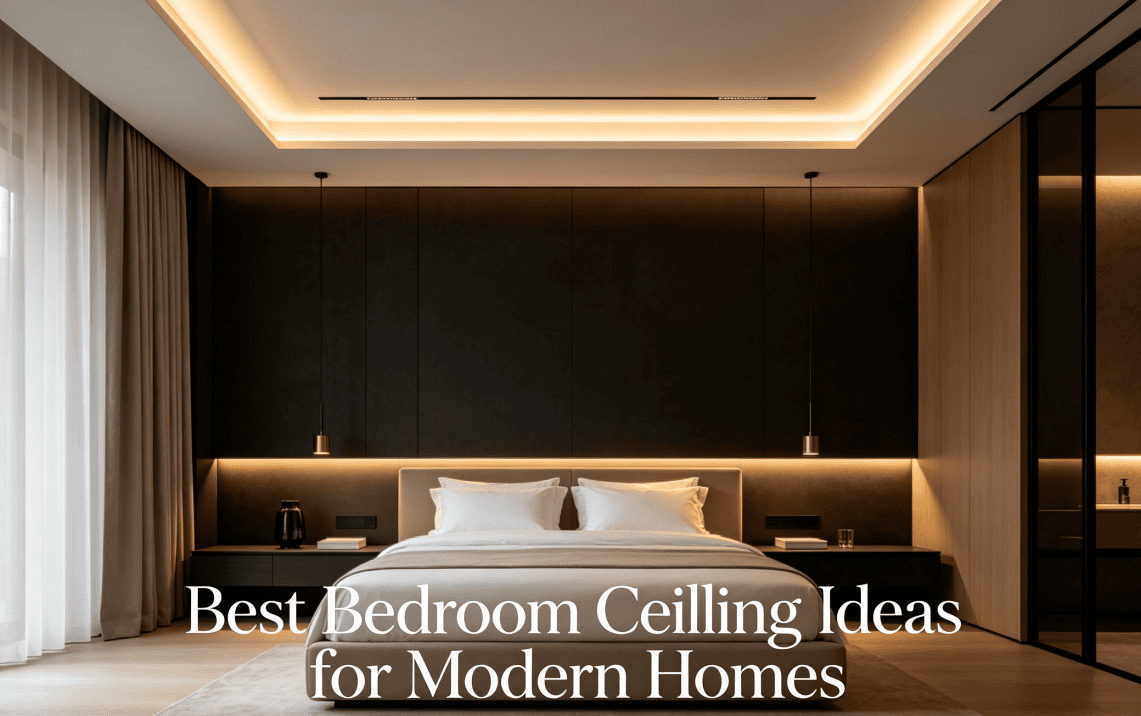
3. Floating Ceiling with Hidden LED Lighting
A floating ceiling creates the illusion that the ceiling is suspended in mid-air.
LED strip lights hidden behind recessed edges produce indirect lighting that feels soft and luxurious, especially during the evening.
This design has become increasingly popular in modern hotels and upscale residential projects because it creates a calm, relaxing atmosphere without requiring decorative chandeliers.
Recommended lighting:
- Warm white LED strips (2700K–3000K)
- Anti-glare recessed spotlights
- Minimal pendant lights beside the bed
4. Single-Layer Recessed Ceiling
Homeowners with average ceiling heights often choose a simple single-layer ceiling.
This design creates visual depth while keeping construction costs relatively low. It also provides enough space for concealed wiring and indirect lighting without making the room feel cramped.
Ideal for:
- Bedrooms around 10–15 m²
- Standard 2.6–2.8 m ceiling heights
- Budget-conscious renovations
5. No Suspended Ceiling
Sometimes, the best ceiling is no decorative ceiling at all.
Modern minimalist homes increasingly leave the original ceiling untouched, relying on premium paint finishes, simple lighting, and carefully selected furniture to achieve an elegant appearance.
This approach maximizes ceiling height while reducing renovation costs.
Advantages include:
- Lowest installation cost
- No hidden dust accumulation
- Easier future maintenance
- Creates a spacious feeling
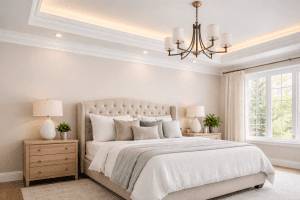
6. Large Tray Ceiling
For spacious master bedrooms, tray ceilings remain a timeless choice.
The recessed center naturally draws attention upward while providing space for statement lighting or layered illumination.
Although more expensive than simpler ceiling styles, tray ceilings add architectural character that complements larger rooms.
Comparison of Popular Bedroom Ceiling Designs
| Ceiling Type | Typical Cost | Installation Difficulty | Maintenance | Advantages | Disadvantages |
|---|---|---|---|---|---|
| Flat Ceiling | Low | Easy | Very Easy | Affordable, timeless, bright | Less decorative |
| Single-Layer Ceiling | Low-Medium | Easy | Easy | Good depth without lowering height too much | Limited design flexibility |
| Double-Layer Ceiling | Medium | Moderate | Easy | Modern appearance, ideal for LED lighting | Slightly higher cost |
| Floating Ceiling | Medium-High | Moderate | Medium | Luxury hotel atmosphere | Requires precise installation |
| Tray Ceiling | High | Professional | Medium | Elegant architectural feature | Best suited for larger bedrooms |
Real-World Recommendation
One homeowner renovating a 12-square-meter bedroom initially planned an elaborate multi-level ceiling with decorative molding. After consulting an interior designer, they instead chose a minimalist double-layer ceiling with hidden warm LED strips and anti-glare downlights.
The result was a room that felt noticeably taller, brighter, and easier to furnish. The simplified design also reduced renovation costs while making future maintenance much easier.
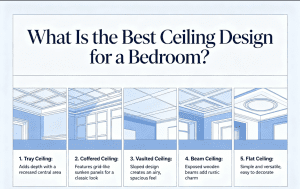
If you’re comparing ceiling styles before starting your renovation, our article What Is the Best Ceiling Design for a Bedroom? explains how different ceiling types influence lighting, visual space, and overall comfort.
External Reference: The U.S. Department of Energy’s lighting guide recommends layered LED lighting to improve energy efficiency while creating comfortable indoor environments, making indirect ceiling lighting an excellent choice for modern bedrooms.
How to Choose the Right Ceiling Based on Your Bedroom Size
Not every ceiling design works equally well in every room. One of the biggest mistakes homeowners make is choosing a design simply because it looks beautiful in photos. The best ceiling is one that complements your room’s dimensions rather than overpowering them.
| Bedroom Size | Recommended Ceiling Design | Why It Works |
|---|---|---|
| Under 10 m² (108 sq ft) | Flat ceiling or no suspended ceiling | Keeps the room visually open and maximizes headroom. |
| 10–15 m² (108–161 sq ft) | Single-layer or minimalist double-layer ceiling | Adds depth without making the room feel smaller. |
| 15–20 m² (161–215 sq ft) | Floating ceiling with concealed LED lighting | Creates a premium, relaxing atmosphere. |
| Over 20 m² (215+ sq ft) | Tray ceiling or customized multi-level ceiling | Balances larger spaces and creates architectural interest. |
Choose According to Ceiling Height
Ceiling height is just as important as floor area. Even the most attractive design can make a room feel cramped if it reduces headroom too much.
- Below 2.6 m (8.5 ft): Stick with flat ceilings or very shallow recessed designs.
- 2.6–2.8 m (8.5–9.2 ft): Single-layer or minimalist double-layer ceilings are usually ideal.
- Above 2.8 m (9.2 ft): Floating ceilings and tray ceilings become practical options.
- Over 3 m (10 ft): Larger architectural ceiling designs can add warmth without making the room feel empty.
As a general rule, avoid lowering the finished ceiling by more than 150 mm (6 inches) unless your room has generous ceiling height.
Selecting the Best Lighting for Modern Bedroom Ceilings
Lighting and ceiling design should always be planned together. A beautiful ceiling cannot reach its full potential without appropriate illumination.
Many designers recommend combining multiple light sources instead of relying on a single ceiling fixture.
- Ambient lighting: Hidden LED strips or flush ceiling lights create comfortable overall brightness.
- Task lighting: Bedside lamps or adjustable wall lights make reading more comfortable.
- Accent lighting: Anti-glare recessed spotlights highlight artwork, wardrobes, or textured walls.
For bedrooms, warm white lighting between 2700K and 3000K generally creates the most relaxing atmosphere.
Common Ceiling Design Mistakes to Avoid
After reviewing hundreds of bedroom renovation projects, several design mistakes appear repeatedly.
- Installing complicated multi-level ceilings in small bedrooms.
- Using cool white lighting that makes the room feel clinical.
- Adding too many recessed spotlights, creating glare instead of comfort.
- Ignoring future maintenance for hidden LED drivers and wiring.
- Choosing decorative moldings that don’t match the home’s overall design style.
Keeping the ceiling clean, symmetrical, and functional usually produces a more timeless result than following short-lived design trends.
Maintenance Tips for Bedroom Ceilings
A modern ceiling requires very little maintenance, but a few simple habits can keep it looking new for years.
- Dust LED channels and light fixtures every few months.
- Inspect painted ceilings annually for small cracks caused by seasonal movement.
- Replace damaged silicone or joint filler before repainting.
- Use a microfiber cloth instead of abrasive cleaning pads.
- Check hidden LED strips if brightness decreases or flickering appears.
Most high-quality gypsum board ceilings can last well over 20 years when installed correctly and kept dry.
Frequently Asked Questions
1. What ceiling style is most popular in modern bedrooms?
Minimalist double-layer ceilings and floating ceilings with concealed LED lighting are currently among the most popular options because they offer a clean appearance without overwhelming the room.
2. Which ceiling design makes a bedroom look bigger?
Flat ceilings, floating ceilings with perimeter lighting, and simple recessed ceilings all help create the illusion of greater height and openness.
3. Are suspended ceilings worth the extra cost?
Yes, if you need to conceal wiring, improve lighting design, or add architectural detail. Otherwise, a well-finished flat ceiling may provide excellent value.
4. What is the best ceiling color for a bedroom?
Soft white remains the most versatile option because it reflects natural light, works with nearly every decorating style, and helps rooms feel larger.
5. How long does a modern bedroom ceiling typically last?
With professional installation and normal indoor conditions, gypsum board ceilings commonly last 20–30 years before requiring major renovation.
Final Thoughts
The best bedroom ceiling isn’t necessarily the most expensive one—it’s the design that fits your room size, ceiling height, lighting needs, and lifestyle. For most modern homes, simplicity often delivers the best long-term results.
If you’re renovating a compact bedroom, a flat or minimalist double-layer ceiling paired with warm LED lighting offers an excellent balance of style, comfort, and affordability. Larger bedrooms can benefit from floating or tray ceilings that add depth and create a luxurious atmosphere without sacrificing functionality.
Before finalizing your design, it’s worth comparing different layouts and lighting combinations to ensure your ceiling complements the rest of your bedroom rather than competing with it.
For more bedroom renovation inspiration, you may also enjoy our guide How to Choose the Right Bedroom Ceiling Design, which explains how to match ceiling styles with different room layouts and interior design themes.