Introduction
Mineral buildup is one of the most common causes of reduced flushing performance in a siphonic toilet. While many homeowners associate weak flushing with aging components or plumbing problems, the real issue is often hidden inside the toilet itself.
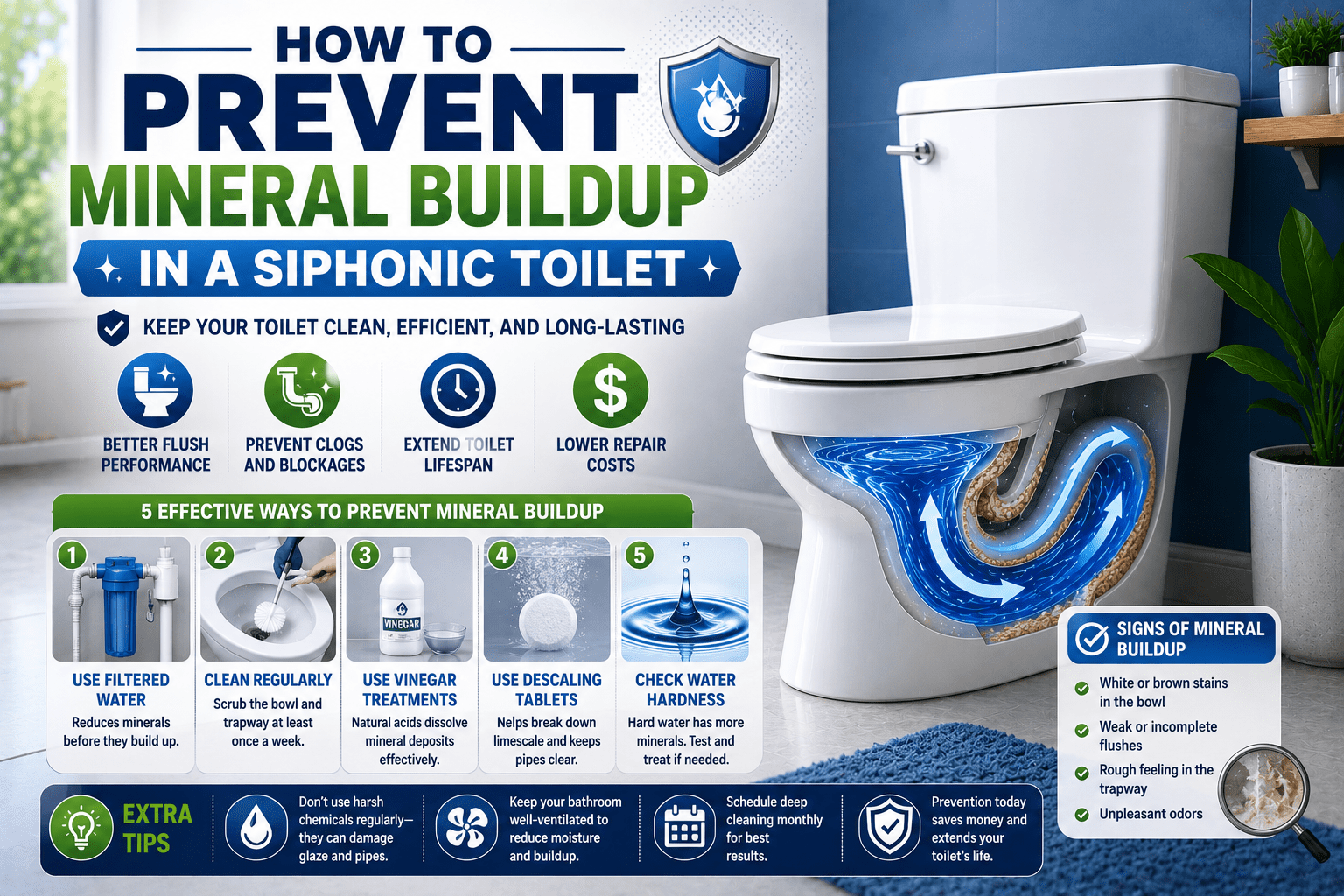
Hard water contains dissolved minerals such as calcium and magnesium. As water repeatedly flows through the toilet, these minerals gradually accumulate inside the bowl, rim jets, trapway, and tank components. Over time, even a high-performance siphonic toilet can experience weaker flushing, slower drainage, and more frequent clogs.
The good news is that mineral buildup is largely preventable. With a few simple maintenance habits and periodic inspections, homeowners can protect flushing performance, extend toilet lifespan, and avoid unnecessary repair costs.
If you’re comparing flushing technologies and maintenance requirements, our comprehensive Siphonic vs Washdown Toilets: Which One Is Better for Your Bathroom? guide explains how different toilet designs respond to hard water conditions.
Quick Answer
To prevent mineral buildup in a siphonic toilet, clean the bowl regularly, descale the trapway every few months, inspect rim jets for blockages, monitor tank components, and address hard water issues before deposits become severe. Consistent preventive maintenance is far more effective than removing heavy buildup after it forms.
Why Mineral Buildup Occurs in Siphonic Toilets
Every flush introduces fresh water into the toilet system. When that water contains high mineral concentrations, small deposits are left behind as water evaporates.
These deposits often develop in areas that are difficult to see, including:
- Rim jets beneath the bowl rim
- The internal trapway
- Tank walls
- Fill valves
- Flush valves
- Water inlet passages
Because a siphonic toilet relies on strong water flow to create suction, even minor restrictions can gradually affect flushing performance.
Understanding how the flushing system operates helps explain why mineral buildup causes performance problems. Our article on How Does a Siphonic Toilet Create Strong Suction? explains the relationship between water flow and siphon action.
Common Signs of Mineral Buildup
Many homeowners don’t notice mineral accumulation until performance begins to decline.
- Weaker flushes than normal
- Longer bowl evacuation times
- Recurring minor clogs
- White or brown stains inside the bowl
- Reduced water flow from rim jets
- Persistent hard water rings
- Slow tank refill cycles
Early detection allows homeowners to resolve the issue before significant restrictions develop.
Prevention Methods Comparison
| Prevention Method | Estimated Cost | Installation Difficulty | Maintenance Frequency | Advantages | Disadvantages |
|---|---|---|---|---|---|
| Weekly Bowl Cleaning | $5-$20/year | Easy | Weekly | Reduces visible deposits | Does not remove hidden buildup |
| Vinegar Descaling | $10-$30/year | Easy | Monthly | Natural mineral removal | May require repeated treatments |
| Rim Jet Cleaning | $0-$10 | Easy | Every 3 Months | Maintains water flow | Often overlooked |
| Trapway Descaling | $10-$40/year | Moderate | Every 3-6 Months | Preserves flushing performance | Takes additional time |
| Water Softener System | $500-$3,000+ | Professional | Ongoing | Whole-house protection | Higher upfront cost |
Method 1: Clean the Bowl Consistently
The simplest way to slow mineral accumulation is regular cleaning.
Weekly cleaning helps remove deposits before they harden and become difficult to remove.
- Scrub beneath the rim
- Remove visible scale deposits
- Inspect the water line
- Check for new stains
While bowl cleaning alone will not eliminate hidden buildup, it significantly reduces overall mineral accumulation.
Method 2: Use Vinegar for Preventive Descaling
White vinegar is one of the most cost-effective solutions for preventing hard water deposits.
Many homeowners pour one to two cups of vinegar into the bowl before bedtime and allow it to sit overnight. This gives the mild acid time to dissolve early-stage mineral deposits.
In moderate hard water regions, monthly vinegar treatments are often sufficient to maintain good performance.
Method 3: Keep Rim Jets Clear
Rim jets play a critical role in directing water into the bowl during a flush.
When mineral deposits restrict these openings, flushing performance can decline noticeably.
- Inspect rim jets every three months
- Use a flashlight to identify blockages
- Clean deposits using a small plastic brush
- Flush repeatedly after cleaning
Even partial restrictions can affect siphon formation and waste removal efficiency.
Method 4: Prevent Trapway Scaling
The trapway is one of the most important areas to protect from mineral buildup.
As deposits accumulate inside the trapway, the internal diameter gradually narrows, reducing water flow and increasing clogging risk.
Homeowners interested in a complete maintenance strategy should also review How to Remove Yellow Stains from a Toilet: Effective Cleaning Methods That Actually Work , which covers bowl, tank, rim jet, and trapway cleaning in greater detail.
For most households, descaling the trapway every three to six months helps maintain optimal flushing performance.
Method 5: Address Hard Water at the Source
If your home has consistently hard water, treating the water supply may provide the best long-term solution.
A water softener system can:
- Reduce calcium deposits
- Extend fixture lifespan
- Improve appliance efficiency
- Reduce cleaning frequency
- Protect plumbing components
While the initial investment is higher, households in severe hard water regions often recover costs through reduced maintenance and fewer plumbing repairs.
According to the EPA WaterSense program, maintaining plumbing fixtures and improving water efficiency can help reduce unnecessary water consumption over time.
Real-World Homeowner Scenario
A homeowner in Nevada experienced recurring weak flushes despite replacing several tank components. After inspecting the toilet more closely, they discovered significant mineral deposits inside the rim jets and trapway.
Following a descaling routine and installing a water softener, flushing performance improved substantially. Two years later, the toilet continued operating without further clogging issues.
This example demonstrates that water quality often plays a larger role in toilet performance than many homeowners realize.
Recommended Prevention Strategy by Household Type
| Household Type | Recommended Approach |
|---|---|
| Single Occupant | Monthly descaling and routine cleaning |
| Couple | Quarterly rim jet inspections and trapway cleaning |
| Family of 4+ | More frequent inspections and preventive descaling |
| Hard Water Areas | Water softener plus quarterly maintenance |
| Rental Properties | Scheduled inspections and preventive cleaning |
Pros and Cons of Preventive Mineral Control
| Pros | Cons |
|---|---|
| Maintains flushing performance | Requires ongoing maintenance |
| Reduces clogging risk | Some methods require regular attention |
| Extends toilet lifespan | Water softeners increase upfront costs |
| Improves water efficiency | Hard water areas require more frequent care |
| Reduces future repair expenses | Hidden buildup may still occur without inspections |
Expert Recommendations
Based on common residential maintenance patterns, prevention is significantly easier and less expensive than removing severe mineral buildup.
- Clean the bowl weekly.
- Use vinegar treatments monthly.
- Inspect rim jets quarterly.
- Descale the trapway every three to six months.
- Consider water softening systems in hard water regions.
Small maintenance efforts performed consistently often prevent the majority of mineral-related toilet performance issues.
Frequently Asked Questions
What causes mineral buildup in a siphonic toilet?
Hard water containing calcium and magnesium leaves deposits behind as water evaporates, gradually creating scale buildup inside the toilet.
How often should I descale a siphonic toilet?
Most households benefit from descaling every three to six months, while hard water regions may require more frequent treatment.
Can vinegar remove mineral deposits?
Yes. White vinegar is commonly used to dissolve light to moderate mineral buildup and is generally safe for toilet surfaces.
Will mineral buildup affect flushing power?
Yes. Deposits can restrict rim jets and trapways, reducing water flow and weakening the siphon effect.
Is a water softener worth it for hard water homes?
In many cases, yes. A water softener can significantly reduce mineral accumulation throughout the plumbing system and lower long-term maintenance requirements.
Conclusion
Preventing mineral buildup in a siphonic toilet is one of the most effective ways to preserve flushing performance, reduce maintenance costs, and extend fixture lifespan. Regular cleaning, periodic descaling, rim jet inspections, and trapway maintenance can prevent many common problems before they develop.
For homeowners living in hard water regions, addressing water quality at the source may provide the greatest long-term benefit. By following a proactive maintenance routine, a siphonic toilet can continue delivering reliable performance for many years.