A toilet that doesn’t flush properly is one of those problems that quickly turns from “minor annoyance” into a real headache. The good news? In most cases, you don’t need a plumber—you just need to understand what’s going wrong.
After working on bathroom renovations and repairs for over a decade, I can tell you that flushing issues usually come down to a few common causes. Let’s walk through them step by step so you can diagnose and fix the problem confidently.
Common Reasons Why Your Toilet Is Not Flushing Properly
Before fixing anything, you need to identify the root cause. Here are the most common issues:
- Low water level in the tank
- Flapper not sealing properly
- Clogged rim jets or siphon jet
- Chain or handle issues
- Partial blockage in the drain
Quick Diagnosis Table
| Symptom | Possible Cause | Recommended Fix |
|---|---|---|
| Weak flush | Low tank water level | Adjust float height |
| Flush stops halfway | Flapper closes too early | Adjust or replace flapper |
| Slow drainage | Partial clog | Use plunger or auger |
| No flush at all | Broken handle/chain | Reconnect or replace parts |
Step-by-Step Fixes You Can Try
1. Check the Water Level in the Tank
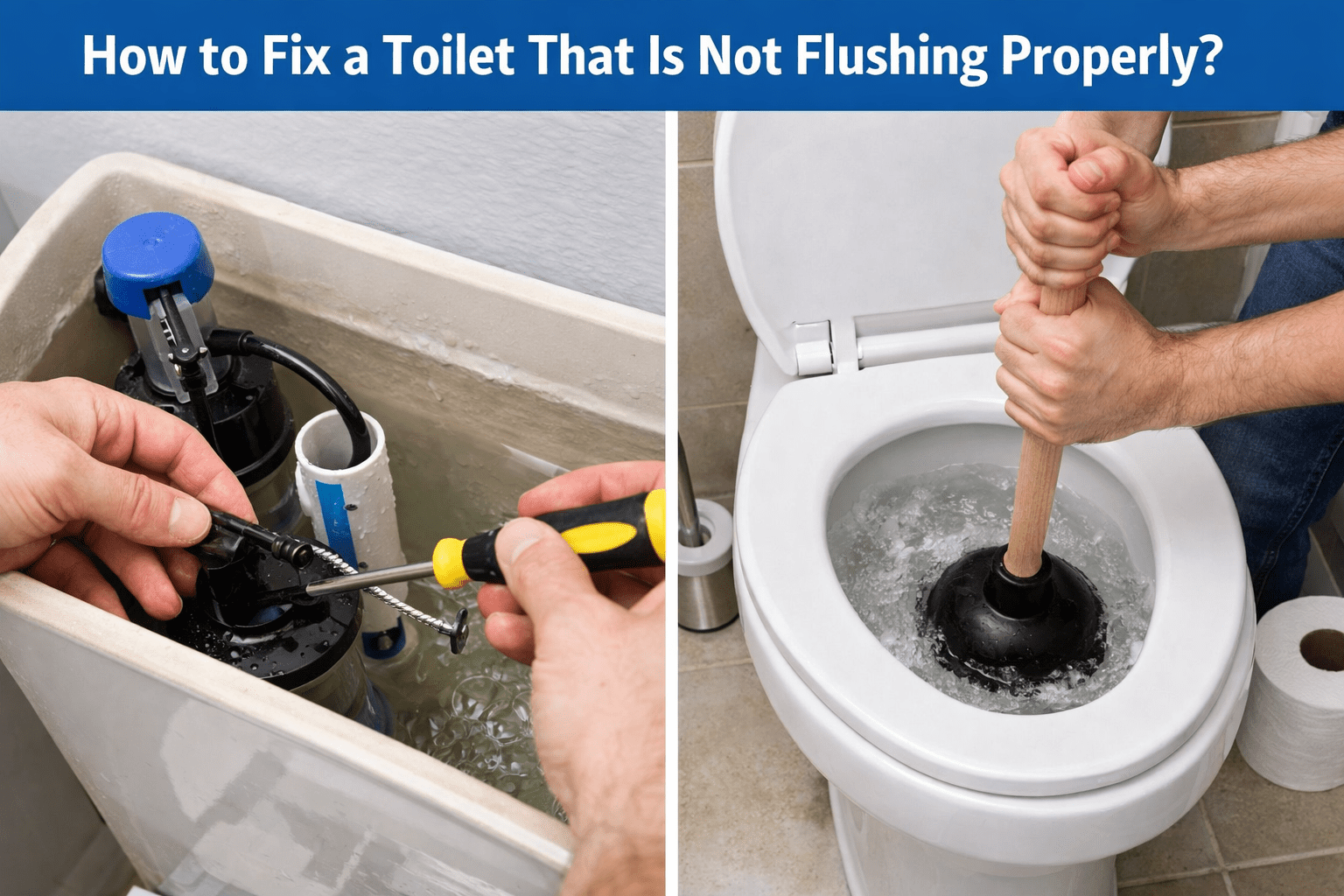
Open the tank lid and look at the water level. It should sit about 1 inch below the overflow tube.
- If it’s too low, adjust the float
- For modern fill valves, turn the adjustment screw
- For older systems, gently bend the float arm
This alone fixes a surprising number of weak flush issues.
2. Inspect the Flapper
The flapper controls how much water flows into the bowl during a flush. If it closes too quickly, the flush will be weak.
- Check for wear or warping
- Ensure the chain has slight slack (not too tight)
- Replace the flapper if it looks damaged
3. Clean the Rim Jets
Mineral buildup can block the small holes under the toilet rim, reducing flushing power.
- Use a small brush or wire to clean the holes
- Pour vinegar into the overflow tube and let it sit for a few hours
This improves water flow significantly, especially in older homes.
4. Check for Partial Clogs
If water drains slowly, you likely have a blockage.
- Use a flange plunger first
- If that doesn’t work, try a toilet auger
Be careful not to use harsh chemicals—they can damage your plumbing over time.
5. Inspect the Handle and Chain
If nothing happens when you press the handle:
- Open the tank and check if the chain is disconnected
- Reconnect or replace the handle mechanism if needed
When Should You Replace the Toilet Instead?
If your toilet is over 10–15 years old and frequently has flushing issues, it may be time for an upgrade. Newer models are designed for better water efficiency and stronger flushing performance.
If you’re considering an upgrade, check out our Floor-standing vs Wall-mounted Toilet Guide to understand your options.
For official water efficiency standards and recommendations, refer to the EPA WaterSense Program, which provides trusted guidelines on high-performance toilets.
Frequently Asked Questions about Toilet Flushing
1. Why is my toilet flushing weak even after cleaning?
If cleaning doesn’t help, the issue is likely related to water level, flapper timing, or a hidden clog in the drain line.
2. Can a clogged vent pipe affect flushing?
Yes. A blocked vent pipe can disrupt airflow, which affects flushing pressure. This is less common but possible in older homes.
3. Is it better to repair or replace a toilet?
If repairs are simple and inexpensive, fixing is fine. But if problems keep coming back, replacing the toilet is usually more cost-effective long term.
Conclusion
Fixing a toilet that doesn’t flush properly is usually straightforward once you identify the cause. Most issues come down to water level, worn components, or minor blockages.
Start with the simple checks—water level, flapper, and chain—before moving on to deeper cleaning or unclogging. In many cases, a 10-minute fix can restore full flushing power.
And if your toilet is outdated or inefficient, upgrading to a modern model might be the smartest long-term solution.