A siphonic toilet is designed to provide strong and quiet flushing, but even high-quality models can clog repeatedly under certain conditions. If your siphonic toilet keeps clogging, the problem is usually related to low water flow, partial blockages, improper usage habits, or an outdated toilet design.
After diagnosing toilet performance issues in many residential bathrooms, I have found that recurring clogs are rarely caused by a single factor. In most cases, a combination of hard water buildup, excessive toilet paper, and inadequate flushing power is responsible.
This guide explains the most common reasons why siphonic toilets clog, how to fix the issue, and when it may be time to replace the toilet altogether.
Quick Answer
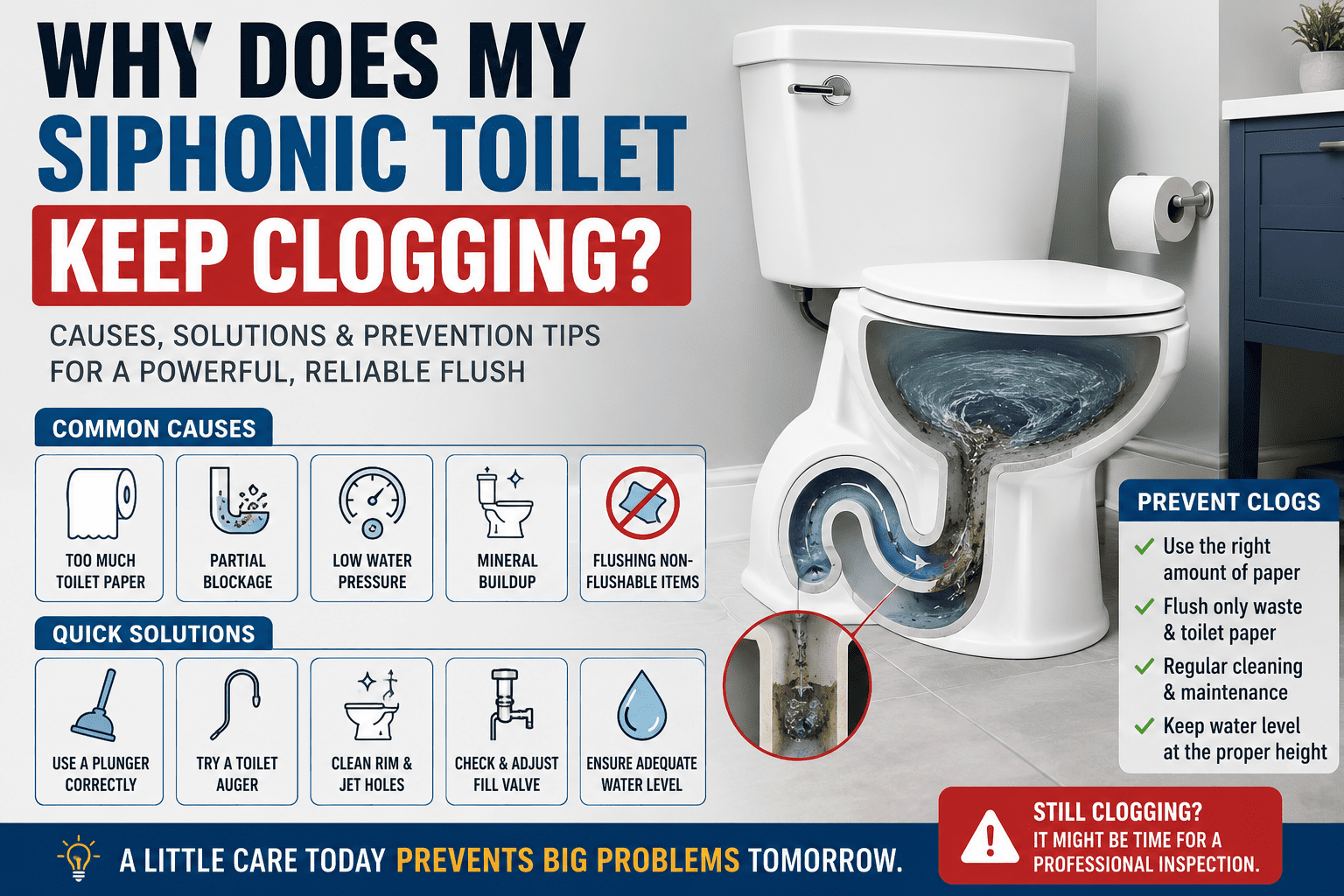
Your siphonic toilet may keep clogging because of a partially blocked trapway, insufficient tank water, mineral deposits, low-quality toilet paper, or an older toilet design with a narrow trapway. Most issues can be solved with cleaning, maintenance, or simple component adjustments.
How a Siphonic Toilet Works
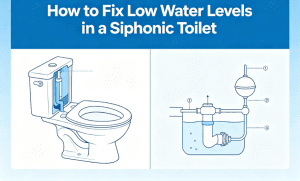
Siphonic toilets rely on a curved trapway and a rapid surge of water to create suction that pulls waste through the drain. If any part of this process is interrupted, flushing performance decreases and clogs become more likely.
If you are unfamiliar with the flushing mechanism, What Is a Siphonic Toilet and How Does It Work? explains the system in detail.
Most Common Reasons a Siphonic Toilet Keeps Clogging
1. Partial Trapway Blockage
The trapway may contain accumulated waste, excessive toilet paper, or mineral deposits that reduce its effective diameter. Even a small restriction can weaken the siphon effect.
2. Low Water Level in the Tank
If the tank does not fill to the correct level, there may not be enough water to generate a strong siphon.
3. Clogged Rim Holes or Jet Hole
Mineral buildup can block the small openings that direct water into the bowl and trapway, significantly reducing flush power.
4. Hard Water Deposits
Calcium and lime scale gradually narrow internal passages and restrict water flow.
5. Excessive Toilet Paper Usage
Ultra-thick toilet paper or flushing large amounts at once can overwhelm even a well-designed siphonic toilet.
6. Old Toilet Design
Some older models have narrower trapways and are more prone to clogging than modern fully glazed designs.
For a broader comparison of flushing systems, see Siphonic vs Washdown Toilets: Which One Is Better for Your Bathroom?.
How to Fix a Frequently Clogging Siphonic Toilet
| Problem | Typical Cost | Difficulty | Maintenance | Benefits | Drawbacks |
|---|---|---|---|---|---|
| Use a plunger or auger | $10–$40 | Easy | Minimal | Removes most partial blockages | May not solve mineral buildup |
| Clean jet and rim holes | $5–$15 | Easy | Annual | Restores flush power | Takes some time |
| Adjust tank water level | $0–$20 | Easy | Rare | Improves siphon strength | Requires inspection |
| Replace fill valve | $15–$40 | Moderate | Low | Reliable water delivery | Minor installation work |
| Replace toilet | $250–$1,200+ | Professional recommended | Very Low | Permanent performance upgrade | Highest cost |
Real-World Experience
In one home with recurring clogs every two weeks, the issue turned out to be heavy calcium buildup in the jet hole and under the rim. After soaking the openings with vinegar overnight and cleaning them with a small brush, the toilet flushed normally again and remained clog-free for months.
This is a common scenario in areas with hard water, where reduced water flow weakens the siphon effect.
When to Replace the Toilet
If your toilet is more than 15 years old, clogs frequently despite maintenance, and has a narrow trapway, replacing it may be the most cost-effective long-term solution.
Modern models with fully glazed 2-1/8 inch or larger trapways offer significantly better clog resistance. Best Siphonic Toilets in 2026 reviews top-performing models currently available.
Independent Testing Data
According to the Maximum Performance (MaP) Testing Program, top-performing siphonic toilets can remove up to 1,000 grams of waste in a single flush. Older low-scoring models are more likely to clog under heavy use.
Who Is Most Likely to Experience Frequent Clogs?
- Homes with hard water
- Older toilets with narrow trapways
- Large households with heavy usage
- Bathrooms using thick multi-ply toilet paper
- Properties with inadequate maintenance
Frequently Asked Questions
1. Are siphonic toilets more likely to clog?
Modern siphonic toilets are highly resistant to clogging, but older designs may be more vulnerable.
2. Why is my siphonic toilet flushing weakly?
Low tank water, blocked jet holes, or mineral deposits often reduce flush power.
3. Can vinegar help prevent clogs?
Yes. Vinegar can dissolve mineral buildup that restricts water flow.
4. How often should I clean the rim and jet holes?
Once or twice per year is usually sufficient, especially in hard water areas.
5. When should I replace my siphonic toilet?
If repeated maintenance fails and the toilet is outdated, replacement is often the best option.
Conclusion
If your siphonic toilet keeps clogging, the most common causes are partial blockages, insufficient water flow, mineral deposits, or an outdated toilet design. Fortunately, most of these issues can be resolved with basic maintenance and a few inexpensive repairs.
Based on years of troubleshooting plumbing fixtures, I have found that cleaning internal water passages and restoring proper tank performance solves the majority of recurring clog problems. If the toilet still clogs after repeated maintenance, upgrading to a modern high-performance model is usually the most effective long-term solution.