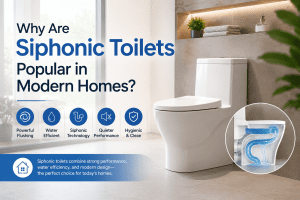
When shopping for a new toilet, you may come across the term siphonic toilet. It sounds technical, but the concept is actually straightforward. A siphonic toilet uses a vacuum-like suction effect to pull waste through the trapway, creating a quieter and more efficient flush than many conventional toilets.
After working with homeowners and evaluating dozens of toilet designs during bathroom remodels, I have found that siphonic toilets are often the preferred choice for people who value comfort, low noise, and better odor control. They are especially common in North America and in premium toilet models from brands like Toto, Kohler, and American Standard.
This guide explains exactly what a siphonic toilet is, how the flushing mechanism works, and whether it is the right choice for your bathroom.
Quick Answer
A siphonic toilet uses a specially shaped trapway and a surge of water to create suction that pulls waste from the bowl. This design provides quieter flushing, stronger waste removal, and better odor control than many other toilet types.
What Is a Siphonic Toilet?
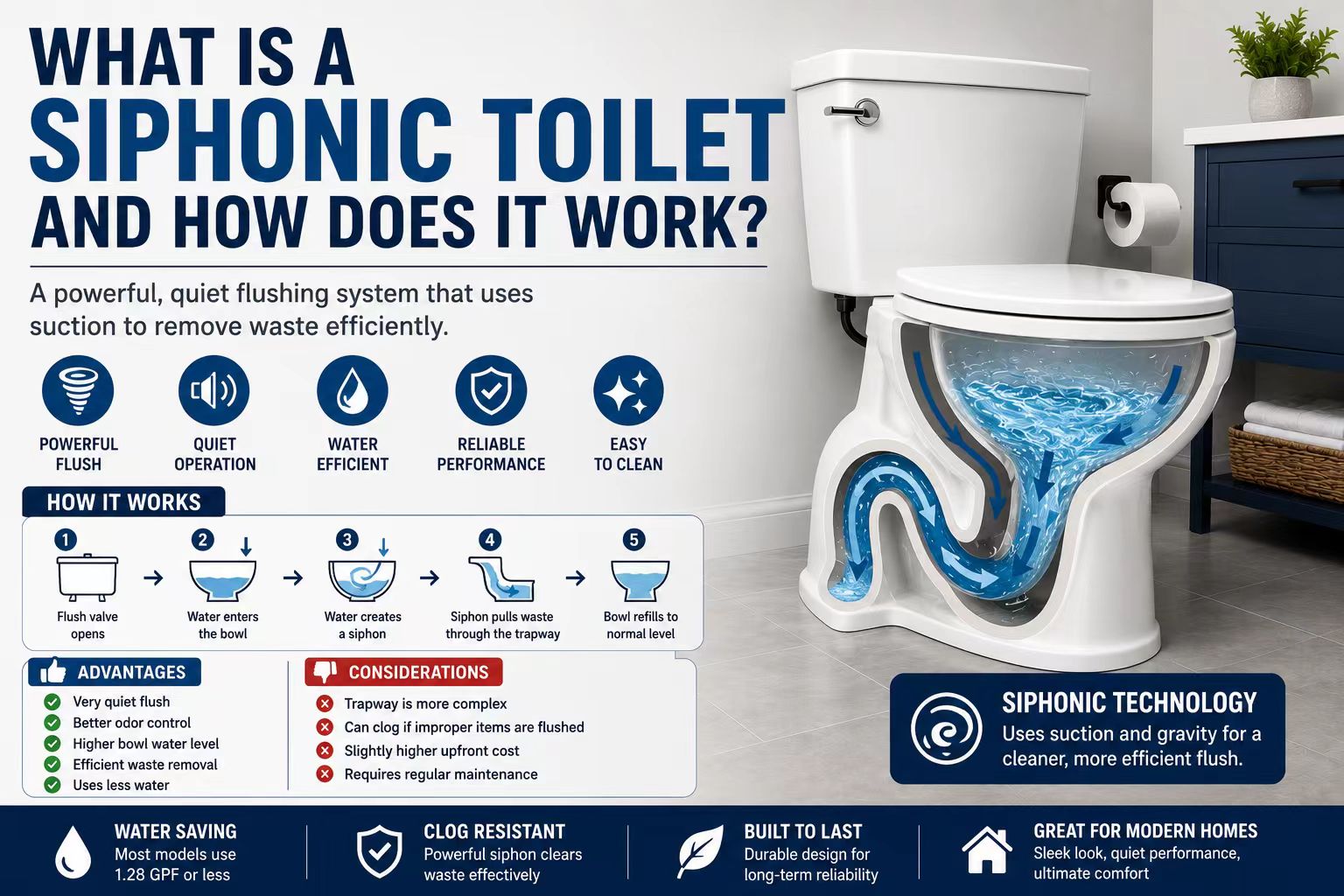
A siphonic toilet is a gravity-fed toilet that relies on the siphon effect to remove waste. Instead of simply pushing waste down with water, the toilet fills the curved trapway completely, which creates negative pressure and rapidly pulls waste out of the bowl.
This flushing technology is widely used in residential bathrooms because it combines strong performance with a more comfortable user experience.
To understand how it compares to other systems, read Siphonic vs Washdown Toilets: Which One Is Better for Your Bathroom?.
How Does a Siphonic Toilet Work?
The flushing process happens in several stages:
- Step 1: Pressing the flush lever releases water from the tank into the bowl.
- Step 2: The water level rises quickly and fills the S-shaped trapway.
- Step 3: Once the trapway is fully filled, a siphon is created.
- Step 4: Suction pulls waste and water rapidly through the drain.
- Step 5: Air enters the trapway, breaking the siphon and allowing the bowl to refill.
This process is similar to how a straw works when liquid is drawn upward by pressure differences.
Main Components of a Siphonic Toilet
| Component | Function |
|---|---|
| Tank | Stores flushing water |
| Flush Valve | Releases water into the bowl |
| Bowl | Contains waste and standing water |
| Jet Hole | Directs water into the trapway |
| Trapway | Creates the siphon effect |
| Refill Valve | Restores water to tank and bowl |
Advantages of Siphonic Toilets
Quiet Flushing
Siphonic toilets flush much more quietly than many washdown models, making them ideal for apartments and bathrooms near bedrooms.
Excellent Odor Control
The larger water surface in the bowl forms a better seal against sewer gases.
Cleaner Bowl
Because more porcelain remains submerged, waste is less likely to stick to the bowl.
Powerful Waste Removal
The suction effect provides efficient waste evacuation with fewer repeat flushes.
For a deeper evaluation of benefits and drawbacks, see Siphonic Toilet Pros and Cons.
Disadvantages of Siphonic Toilets
- Higher initial purchase price
- Some premium models use proprietary parts
- Older designs may have narrower trapways
- Typically heavier than simpler toilet designs
Siphonic Toilet vs Other Toilet Types
| Feature | Siphonic Toilet | Washdown Toilet |
|---|---|---|
| Noise Level | Very Quiet | Louder |
| Odor Control | Excellent | Moderate |
| Bowl Water Level | High | Low |
| Bowl Cleanliness | Very Good | Good |
| Typical Cost | $200–$1,200+ | $150–$800+ |
| Maintenance | Low to Moderate | Low |
Real-World Experience
In one master bathroom renovation, a homeowner upgraded from a builder-grade toilet to a modern siphonic model. The immediate difference was the remarkably quieter flush. Over the next few months, they also noticed fewer odors and less need to scrub the bowl.
These practical benefits are why many homeowners choose siphonic toilets despite the slightly higher upfront cost.
Who Should Choose a Siphonic Toilet?
- Homeowners who want a quieter bathroom
- Families sensitive to odors
- People seeking premium comfort
- Master bathroom remodelers
- Users who prefer less frequent bowl cleaning
Independent Performance Data
According to the Maximum Performance (MaP) Testing Program, many high-quality siphonic toilets remove 800 to 1,000 grams of waste in a single flush, which is considered outstanding performance.
If you are considering a purchasing decision, Best Siphonic Toilets for Modern Bathrooms can help narrow your options.
Frequently Asked Questions
1. What makes a siphonic toilet different?
It uses suction rather than simple downward water force to remove waste.
2. Are siphonic toilets quieter?
Yes. They are among the quietest flushing toilet designs available.
3. Do siphonic toilets smell less?
Yes. Their larger water seal provides superior odor control.
4. Are siphonic toilets more expensive?
Typically yes, but they often deliver a better overall user experience.
5. Are siphonic toilets worth it?
For homeowners who value comfort, quiet operation, and performance, they are usually an excellent investment.
Conclusion
A siphonic toilet is a highly efficient toilet design that uses the siphon effect to create powerful suction during flushing. This technology provides quieter operation, stronger waste removal, better odor control, and improved bowl cleanliness.
Based on real-world remodeling experience and performance data, siphonic toilets are one of the best choices for residential bathrooms. If you are looking for a premium toilet that combines comfort and functionality, a siphonic toilet is well worth considering.