
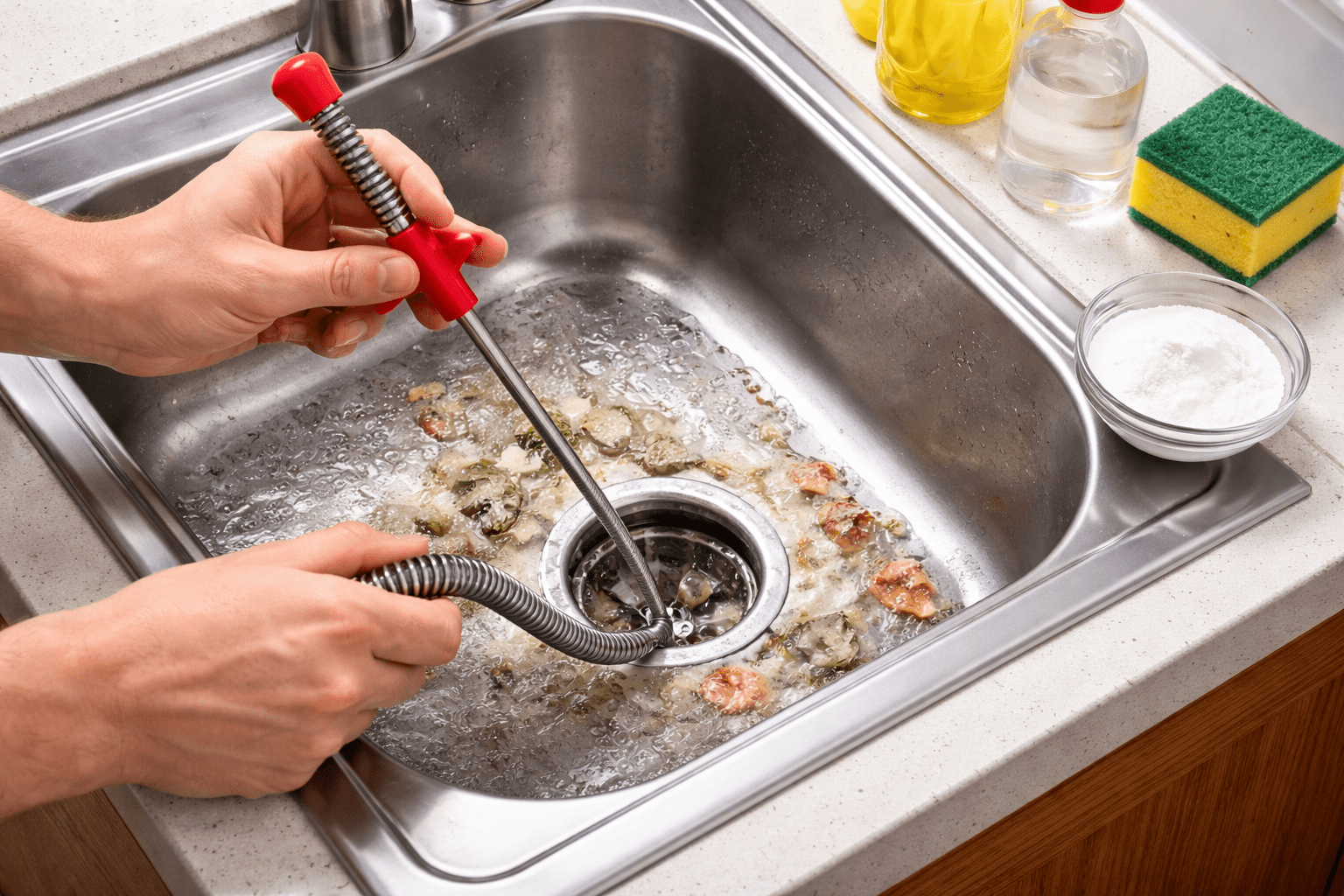
A clogged kitchen drain is one of the most common (and frustrating) problems homeowners face. One minute everything is flowing fine, and the next, you’re dealing with standing water, bad smells, and slow drainage.
The good news? In most cases, you don’t need expensive plumbing services. With the right approach and a bit of hands-on work, you can fix the issue yourself. In this guide, I’ll walk you through practical, proven solutions based on real-world experience.
What Causes Kitchen Drains to Clog?
Before jumping into solutions, it’s important to understand the root causes:
- Grease buildup – Cooking oil and fats solidify inside pipes
- Food debris – Especially rice, coffee grounds, and fibrous vegetables
- Soap residue – Combines with grease to create blockages
- Foreign objects – Small items accidentally washed down the sink
Quick Diagnosis Table
| Symptom | Likely Cause | Recommended Solution |
|---|---|---|
| Slow draining water | Grease buildup | Hot water + dish soap |
| Standing water | Full blockage | Plunger or drain snake |
| Bad odor | Food residue | Baking soda + vinegar |
| Gurgling sound | Partial clog or vent issue | Deep cleaning or inspection |
Step-by-Step Solutions for Clogged Kitchen Drains
1. Start with Hot Water and Dish Soap
This is the simplest fix and often surprisingly effective for grease-related clogs.
- Boil a pot of water
- Add a few drops of dish soap
- Slowly pour it down the drain
This helps dissolve grease and restore flow.
2. Use Baking Soda and Vinegar
This natural method works well for organic buildup and odors.
- Pour 1 cup of baking soda into the drain
- Add 1 cup of vinegar
- Let it sit for 15–20 minutes
- Flush with hot water
You’ll notice bubbling—that’s normal and helps break down debris.
3. Try a Plunger
If the clog is more stubborn, a plunger can create pressure to dislodge it.
- Fill the sink with a small amount of water
- Place the plunger over the drain
- Push and pull firmly several times
This works best for blockages close to the surface.
4. Clean the P-Trap
The P-trap (the curved pipe under your sink) is a common place for clogs.
- Place a bucket underneath
- Unscrew the trap
- Remove debris and rinse thoroughly
This method is very effective for solid blockages.
5. Use a Drain Snake (Auger)
For deeper clogs, a drain snake is one of the most reliable tools.
- Insert the snake into the drain
- Rotate to catch debris
- Pull it out slowly
This is especially useful for stubborn or deep pipe clogs.
What to Avoid
- Harsh chemical cleaners – They can damage pipes over time
- Pouring grease down the sink – One of the main causes of clogs
- Ignoring slow drainage – Small issues quickly become major problems
When Should You Call a Professional?
If none of the above methods work, the clog may be deeper in your plumbing system or related to venting issues.
In that case, it’s best to call a licensed plumber to avoid further damage.
If you’re dealing with other home plumbing issues, you might also find our toilet troubleshooting guide helpful.
For official guidance on safe plumbing practices and water systems, refer to the EPA WaterSense Program.
Frequently Asked Questions about Kitchen Drains
1. What is the fastest way to unclog a kitchen drain?
Hot water combined with dish soap is often the quickest solution for grease-related clogs. For tougher blockages, a plunger or drain snake works best.
2. Can baking soda and vinegar really unclog drains?
Yes, but mainly for light clogs and odors. It’s not effective for heavy blockages caused by solid debris.
3. Why does my kitchen drain keep clogging?
Recurring clogs are usually caused by grease buildup, improper waste disposal, or deeper plumbing issues that need inspection.
Conclusion
Clogged kitchen drains are a common issue, but most can be fixed with simple, practical solutions. From hot water and dish soap to using a drain snake, the key is identifying the cause and applying the right method.
Regular maintenance and smart habits—like avoiding grease buildup—can prevent future problems and keep your kitchen running smoothly.
If the problem persists, don’t hesitate to seek professional help. Fixing it early will save you time, money, and frustration in the long run.
