2026 Bathroom Waterproofing Guide: Avoid These 7 Common Mistakes to Save Time and Money
1. Introduction
Bathroom waterproofing is one of the most important aspects of a successful renovation. Without proper waterproofing, water leakage can damage walls, floors, and structures, leading to costly repairs. In 2026, with the advent of new technologies, bathroom waterproofing has become easier than ever. However, many homeowners still make common mistakes that end up wasting time and money. In this guide, we’ll highlight the 7 most common waterproofing mistakes and provide actionable tips to help you avoid them. Whether you’re remodeling your bathroom for the first time or planning a renovation, this guide will help you achieve a lasting, cost-effective waterproofing solution.
2. Table of Contents
- Why Bathroom Waterproofing Is So Important
- 7 Common Waterproofing Mistakes & How to Avoid Them
- How to Choose the Right Waterproofing Materials
- Bathroom Waterproofing Costs
- FAQ: Common Questions About Bathroom Waterproofing
- Conclusion: Final Tips for Successful Bathroom Waterproofing
3. Why Bathroom Waterproofing Is So Important
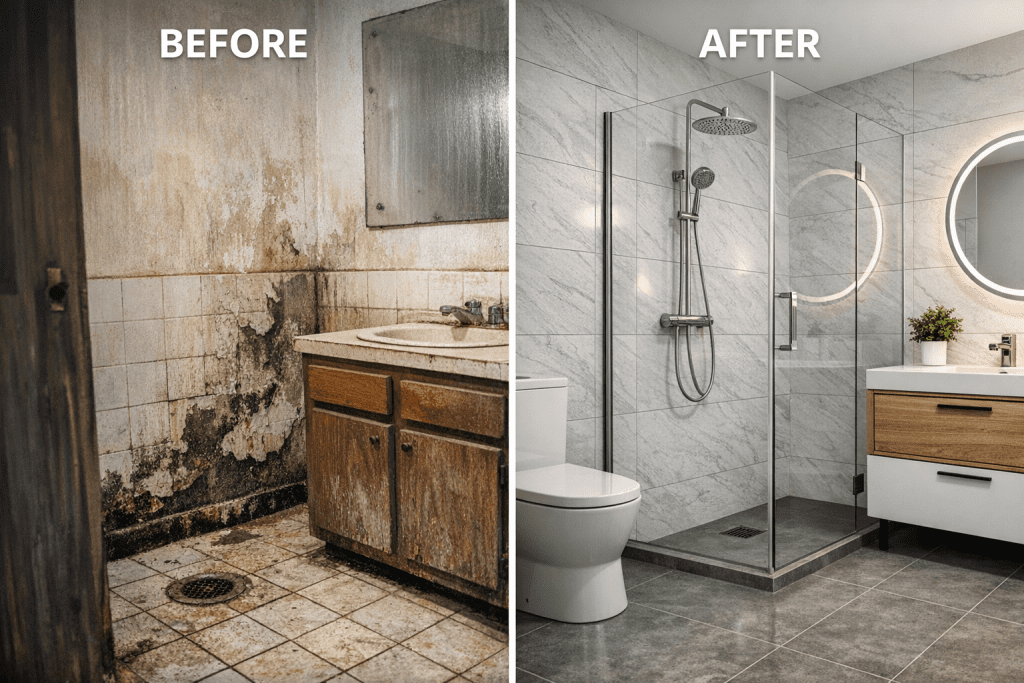
Bathrooms are one of the most moisture-prone areas in a home. Without proper waterproofing, water can seep into the walls, floors, and foundation, leading to mold, rot, and structural damage. Effective waterproofing is essential not just for the longevity of your bathroom but also for the safety and comfort of your home. As bathroom usage increases, more homeowners are recognizing the importance of waterproofing to prevent costly repairs down the line.
However, many don’t realize that waterproofing isn’t just about applying a coat of waterproof paint. It’s a comprehensive process that includes selecting the right materials, applying them correctly, and checking the installation for leaks. With the right approach, waterproofing can extend the life of your bathroom and prevent future damage.
4. 7 Common Bathroom Waterproofing Mistakes & How to Avoid Them
Mistake 1: Choosing the Wrong Waterproofing Materials
Many homeowners choose waterproofing materials based solely on price, not considering their durability or suitability for the bathroom environment. Cheap materials can crack, peel, or degrade quickly, leaving your bathroom vulnerable to water damage. Always opt for high-quality materials designed for high-moisture environments, such as polyurethane waterproofing coatings or cement-based membranes.
Mistake 2: Ignoring Wall Waterproofing
Many people think waterproofing only applies to the floor, but the walls are just as susceptible to water damage. Without proper wall waterproofing, water can penetrate the walls, causing mold, mildew, and even structural damage. Make sure to apply waterproofing materials on both the floors and walls, especially around high-moisture areas like the shower or bathtub.
Mistake 3: Not Allowing Proper Drying Time
After applying the waterproofing layer, it’s essential to allow it to fully dry before proceeding with the next steps of your renovation. Rushing the process can result in inadequate waterproofing, leading to failure down the line. Ensure you allow at least 24-48 hours for the waterproofing layer to dry completely before continuing with your renovation project.
Mistake 4: Uneven Application of Waterproofing Layers
If the waterproofing layer is applied unevenly, certain areas may be left exposed to water penetration. Make sure to apply the waterproofing layer uniformly, ensuring even coverage, particularly around seams and edges, where water is most likely to seep through.
Mistake 5: Skipping Post-Waterproofing Inspections
After completing the waterproofing process, it’s essential to inspect the work thoroughly. Many homeowners neglect to check for leaks, cracks, or improperly sealed joints. Conduct a water test to ensure that the waterproofing layer is functioning properly before proceeding with the rest of your renovation.
Mistake 6: Incorrect Drain Placement
Improper drain placement can lead to standing water, which puts unnecessary pressure on your waterproofing system. The drain should always be placed at the lowest point of the floor to ensure proper water flow and prevent pooling. If your drain is incorrectly positioned, water may get trapped, eventually compromising the waterproofing layer.
Mistake 7: Overlooking Small Waterproofing Details
Waterproofing is not just about the major surfaces. Small details like the seams around pipes, the edges of tiles, and corners need special attention. Even the smallest gaps can cause water to penetrate, leading to long-term damage. Ensure that every edge, joint, and corner is properly sealed to guarantee a fully waterproof bathroom.
5. How to Choose the Right Waterproofing Materials
Choosing the right waterproofing materials is crucial to ensuring your bathroom’s longevity. Common materials include polyurethane coatings, cement-based waterproofing membranes, and liquid-applied waterproofing systems. Each type has its pros and cons, so it’s essential to consider the specific needs of your bathroom.
Polyurethane coatings are great for flexible waterproofing, ideal for areas prone to movement. Cement-based membranes, on the other hand, provide a more rigid and durable layer, perfect for floors and walls in high-traffic bathrooms. Consult with a professional to determine which material best fits your budget, environment, and long-term needs.
6. Bathroom Waterproofing Costs
The cost of waterproofing a bathroom can vary widely depending on the size of the area and the materials chosen. On average, waterproofing materials range from $10 to $30 per square meter, while labor costs can range from $30 to $50 per hour depending on your location.
For a typical 100 square foot bathroom, the total cost can range from $500 to $2,000, depending on the complexity of the job and the quality of the materials used. It’s a good idea to get quotes from several contractors and materials suppliers to find the best option for your project and budget.
7. FAQ: Common Questions About Bathroom Waterproofing
Q: How long does bathroom waterproofing take?
A: The waterproofing process typically takes 3-5 days, depending on the complexity of the job and drying times for the materials.
Q: How can I tell if my bathroom needs waterproofing?
A: If you notice water leakage, mold, or damaged walls, it’s a clear sign that your bathroom needs waterproofing. A professional inspection can provide further insight into the situation.
8. Conclusion: Final Tips for Successful Bathroom Waterproofing
Ensuring a waterproof bathroom requires careful planning and attention to detail. By avoiding these common mistakes and selecting the right materials, you can protect your bathroom from water damage for years to come. Always allow enough drying time, inspect your work, and consider all aspects of waterproofing, from the walls to the smallest seams. Following these tips will help you achieve a cost-effective and lasting waterproofing solution.
